Wednesday, July 4, 2012

Supplement peddlers, supplement peddlers every where, Nor any drop of truth to drink.

In the Rime of The Ancient Mariner, the epic 18th century poem penned by Samuel Taylor Coleridge, there is a famous stanza: 
Water, water, every where,
And all the boards did shrink;
Water, water, every where,
Nor any drop to drink.
The poetry speaks to the frustrations of thirsty sailors aboard a ship surrounded by uncharted waters they dare not drink. Like the craving sailors, I too long to quench my thirst for truth while surrounded by a rising sea of misinformation.

Although I’m not looking to disturb the tranquility of this relaxing 4th of July holiday, I hope you will forgive my trespass as I call out another pill pushing would be health expert adding more confusion to the churning sea of questionable data.

I previously wrote how you can't believe everything you read and I called it Caveat Lector, which in Latin means "Let the reader beware!"  Of course, the obvious question is then how can you trust what I write, and I acknowledge that this is more than a fair question. My forthright response is that I don't have any agenda other than to improve people's health and make the world a better place.

Most people who read my blog will never be my patient for a variety of reasons ranging from they don't live near my office to they already have a doctor they love.  Also, I don't sell anything so I never have to persuade you to buy something from me or extol its virtues for financial gain. Most importantly, I have been blessed that through my hard work, both during my schooling and my entrepreneurial ventures, and a more than a deserving measure of good fortune, I am financially independent.

Finally, I spent many years in schools, both medical and business, and consider myself a life-long learner in search of truth and understanding.  This search for the truth is first and foremost for my own sake, and I often self-remind regarding the dangers of fooling yourself.
But that is not all that drives me. Although not as religiously observant as I was growing up, I still consider myself a religious person.  Accordingly, having studied the Bible extensively when I was young, I remain ever mindful of the biblical prohibition that states "Do not put a stumbling block in front of a blind person." This biblical phrase is jointly understood to mean that one should not deceive someone simply because he or she can and also that one must be mindful of those at a disadvantage as to adjust one's approach and not take advantage of them.

Therefore, it is with great sincerity and purpose that I challenge many people in this country, doctors and laypersons alike, who seek to deceive others into taking action likely to yield no benefit other than to the person pushing the advice or product. Today, I have a case in point.

A patient of mine sent me this morning a newsletter published by a person named Nan Kathryn Fuchs. Fuchs states that she has a PhD, but despite my best efforts, including reviewing her own website, I could not determine the discipline of her PhD and what university granted it. Interestingly, I am not the first to ask this question as the question was previously posted on the internet and it received no response. So I wrote (Dr?) Fuchs today an email asking about the subject matter of her degree and the source of it, and I await her response.  My research in Fuchs did reveal that she is affiliated with an organization called MSIA.

Here's an excerpt from Wikipedia describing MSIA in which Fuchs is quoted.

"MSIA is a nondenominational and ecumenical church, the stated purpose of which is to "teach Soul Transcendence, which is becoming aware of yourself as a Soul and as one with God, not as a theory, but as a living reality. Controversy has surrounded MSIA: it has been accused of being a cult by some former members and by the Cult Awareness and Information Centre and claims have been made that one of its founders Roger Hinkins had unethical sexual relationships with members. MSIA has also been accused of being an "offshoot" of Lifespring, a private, New Age/Human Potential Training company founded in 1974. According to Nan Kathryn Fuchs, a devoted member of MSIA for 13 years and a minister who served on the Ministerial Board for a number of years..."

I respect the full variety of religious perspectives, but this group sounds illegitimate and cultish, and I can't say for certain based on such little detail. 

So why all the fuss then about Fuchs?  Her newsletter with the heading, Women's Health Alert, had a main article titled, "Are the benefits of supplements real?" The article goes on the quote a new report issued by the prestigious and ethical sounding Council for Responsible Nutrition (CRN) titled "The Benefits of Nutritional Supplements (4th Edition), which found consistent and adequate health benefits from using supplements. 

In fact, here's my favorite quote from Fuch's newsletter.  
 
"For years, conventional medicine has pooh-poohed the need for supplements. They used to say you didn’t need them at all — unless you had scurvy. As people began to see their incredible health benefits, though, the medical establishment had to adjust. But they’ve done so very reluctantly. In fact, some still insist supplements just give you expensive urine.
Well, all the naysayers who insist that nutritional supplements are unnecessary better get ready to make more adjustments in their thinking. The Council for Responsible Nutrition (CRN) has a reply in the form of an updated comprehensive report citing sound scientific studies that prove otherwise."

There is only one problem. By their own description, "The Council for Responsible Nutrition (CRN), founded in 1973 and based in Washington, D.C., is the leading trade association representing dietary supplement manufacturers and ingredient suppliers."

Not hard to imagine that the business trade group representing supplement companies would come out with a report stating that supplements have benefits.  Even if accurate, it would be foolhardy to trust such a report under the circumstances. Fuchs, taking cover under this questionable report, and denigrating the reluctant medical profession (why do you think ii is by and large resistant?) in the process, nevertheless uses it to peddle her own supplements.  

What a surprise. Forgive my sarcasm, but it is just incomprehensible to me that any sane person would read this newsletter seriously, let alone buy a product from Fuchs.

There are many such people in this country trying to peddle unneeded and potentially harmful products on an unsuspecting and trusting populace.  I will continue to identify them and call them out as I come across them. If Fuchs writes back, I will in fairness share her reply about her education.  In the interim, whether from Fuchs or other people who write to tell you supplements are good and then in turn, try to sell some to you, I say Caveat Lector and Caveat Emptor, let the reader and buyer both beware!

Tuesday, July 3, 2012

Press Release For Thursday July 5, 2012


MDPrevent & Consumer Reports Agree 
On The Need For Preventive Medicine
MDPrevent Offers The “Prevention Attention” 
Advocated For By July 2012 Issue

MDPrevent, a primary care medical practice focused on preventive medicine and wellness offers the full range of preventive medicine and wellness services desired by patients.
Delray Beach, FL July 3, 2012
According to Consumer Reports on Health (CR), “Immunizations, cancer screenings, lifestyle counseling, and other wellness measures can save lives. But your doctor may be falling short when it comes to making sure you’re up to date on the services you need.” CR cites a January 2012 study published in the American Journal of Preventive Medicine to support is conclusions.
CR is spot on. In 2011, Medicare implemented new coverage for Annual Wellness Visits (AWV) as part of a growing menu of preventive services. As with many other preventive services, the AWV requires no co-payment or deductible.  Yet, in 2011, only 6% of patients received this service from doctors who performed it and many did not receive the proper service. Why? As CR writes, “wellness gets squeezed” because “it doesn’t pay for doctors” to do it, for many doctors “its awkward territory,” and “most doctors don’t have the time.” Wellness, according to CR, when even done, is typically not the “focal point”; rather, “wellness gets squeezed into visits when people have a problem.”  
Working within Medicare’s guidelines for AWV, MDPrevent, a primary care, preventive medicine, and wellness center was launched to fully address the wellness needs of Americans. MDPrevent’s innovative medical practice combines in one location the expertise needed to provide the full spectrum of wellness services. With a team consisting of a physician, nurse practitioner, nutritionist/registered dietitian, health psychologist, fitness and yoga instructor, and health educator, MDPrevent can uniquely help patients enjoy life to the fullest, free of disease.
The MDPrevent model is sure to become the future of integrative medicine enabling patients to draw on the full expertise and guidance they need from their primary care office to avoid, delay, or mitigate chronic diseases and improve their current quality of life.
As one part of MDPrevent’s offerings, it custom developed the LEAN program, a medically supervised 12 week personalized lifestyle modification program that includes initial medical assessment, coupled with private consultations with a nutritionist/dietitian, psychologist, fitness and yoga instructor, and health educator, and rounded out with a final medical assessment. Patients then continue with private consultations as needed or join support group and educational group sessions. The program aims for slow, but steady and sustainable lifestyle modification and weight loss by focusing on healthy living and well-being. In addition, MDPrevent is also a Certified Diabetes Education Center catering to the nutritional and educational needs of diabetics.
MDPrevent was founded by Dr. Steven Charlap, a pioneering physician with an MD from New York University, an MBA from Harvard, and general surgery training. In 1989, he founded HealthDrive, which grew it to be the largest U.S. medical and dental practice serving the extended care industry. Over twenty years, HealthDrive cared for over 5 million seniors and Dr. Charlap witnessed first-hand what happens to people who don’t take adequate care of their health, are institutionalized and become dependent on the kindness of strangers. According to Dr. Charlap, “It is sad to see people end their lives in a nursing home. You realize that in such a setting relatively little can be done to improve health at that point. Even more frustrating was that one couldn’t even try because Medicare and Medicaid basically shunned preventive services.”
In 2010, after Dr. Charlap learned that Medicare was initiating coverage for wellness services that can positively impact people’s lives while saving Medicare money, he founded MDPrevent to create an innovative preventive medicine, primary care, and education center focused on providing community based services to help people change their lifestyles to avoid and mitigate chronic diseases. Dr. Charlap states, “The scientific evidence shows that the longer you live, the healthier you’ve been.” After extensive research and consultations with the experts in the field of primary prevention, an interdisciplinary dream team of Preventioneers was assembled.
Testimonials from patients include comments like, “I finally have my head on straight” or “it’s changed my life.” (See www.mymdprevent.com, Testimonials). According to Dr. Charlap, “I see the smiles on people’s faces when they complete a session for the day. They feel empowered and for the first time in a long time, in control of their health and their weight. I know we are really on to something that can change the future of healthcare.”
About MDPrevent
MDPrevent is a new concept in primary care that seamlessly integrates primary care, preventive medicine, and wellness. The healthcare practice helps American’s prevent problems before they happen, reduce healthcare costs, stay healthy, and enjoy a life well lived through free Annual Wellness Visits (paid 100% by Medicare and most major insurances) The Annual Wellness Visit includes a comprehensive health risk assessment, biometric measurements, review and analysis of prescription, supplement and vitamin use, nutrition review, and development of a five- to 10-year prevention plan.
MDPrevent’s Preventioneers, or Prevention Pioneers, include MDs, nurse practitioners, health psychologists, registered dietitians and nutritionists, fitness and yoga instructors, and health educators, offer private consultations and experiential group sessions, medically supervised weight loss (with no pills, injections or surgery - paid 100% by most insurances if you qualify) and other classes on health, diet and nutrition, fitness and exercise, stress management, mindfulness, relationship and social network building, and other key elements of a healthy life. The goal: to improve life and smooth out the effects of aging by identifying, preventing, delaying or mitigating the development of chronic diseases such as heart disease, diabetes, stroke, dementia and some forms of cancer. Learn more at http://www.MyMDPrevent.com. Read Dr. Charlap’s blog at mdprevent.blogspot.com
MDPrevent
5130 Linton Blvd. Suite H1
Delray Beach, FL 33484
(561) 807-2561

Sunday, July 1, 2012

Dr. Oz's Zany Zinc Recommendation


Arguably, given his national stage and reach, Dr. Oz is one of the biggest pill pushers in the United States. In the seven months I’ve been watching his show, I cannot remember a week going by without him promoting one dietary supplement or another. 

His favorite recommendations seem to involve some miracle cure or magic pill to lose weight. This past Friday morning, in a repeated episode which first aired September 28, 2011, he made three such recommendations. Today’s blog will focus on the zaniest of the three—his recommendation to ingest extra zinc to support weight loss. Before, I offer some information about the role of zinc in the human body; please indulge me as I provide some additional context for his recommendations.

The tile of Friday’s show was no less haughty than the “Seven Day Miracle Plan to Boost Your Metabolism.” Don’t even get me started on what one’s repeated offering of miracles suggests about the person, but that was the title and here’s what his “miracle” offering entailed. It all started innocently enough. He recommended that people on day one of his seven day plan use an online calculator to determine the rate of their metabolism (how many calories based on your gender, height, weight, and age). To quote the show’s website, “Your basal metabolism represents the number of calories your body burns when at rest, but awake, over the course of one day. This number is one of the factors that determine your total calorie needs for the day.

On day two, he recommended that people reduce their daily intake by 100 calories. To demonstrate how, he took a bowl of chocolate ice cream (really?) and scooped out about three tablespoons and said that represented about 100 calories. Not exactly the example I would have used, but it could be worse. The problem I had with this example was that he started with a heaping bowl of ice-cream so a mere reduction would not factor in any weight loss diet I know. Also, by using ice-cream and imprecise measurements, he was indirectly advocating that conventional sugar-dense and calorie-rich ice cream is a viable part of a healthy diet, let alone a diet meant to result in weight loss. While I am not a fan of the concept of dieting, I do believe that what and how much you eat do affect both weight and health.

Oz then suggested on day three that you add protein to your diet to lose weight. There is logic to the substitution of protein for carbohydrates in one’s diet (amino acids are essential, while carbs are not) although the source of protein may be contentious. I prefer protein to come from nuts, beans, and wild fish rich in Omegas 3s, but I take no issue with this suggestion.

His day four suggestion is somewhat contentious. He stated that to lose weight you must eat every three hours. He recommended snacking with pistachios and dried apricot. First of all, I don’t agree with the dried apricot suggestion. Although preferable to many processed snacks, I am not a fan of dried fruits due to the increased fructose concentration. Nevertheless, I agreed that people should eat their first meal close to awakening. However, if you wake at 6 or 7 each day, I don’t believe you should snack before lunch.  I do believe in snacking between lunch and dinner with an organic apple, baby carrots, and/or mixed unsalted nuts. But these are my personal preferences and his suggestion to snack every three hours is not completely out of whack.

On day five, he recommended that people drink at least three drinks a day with ice-cubes. Oz claimed that when the body comes in contact with an iced drink, it must consume more calories to warm up the drink. An interesting theory, and one that would suggest that people who live in cold climates burn more calories from daily living, right?  For an interesting review of the subject, please see the article at this link, http://www.chow.com/food-news/54270/does-drinking-ice-water-burn-calories/ .

I cannot attest to the accuracy of the calculations presented in the article, but the article, particularly the last sentence, should give one serious pause about following Dr. Oz’s suggestion.

Oz’s suggestion also included using coffee or green teas with the ice to boost your metabolism. That’s a whole topic for another day (although green coffee extract was already repudiated in one of my blogs last week).  However, the question to ask is even if coffee boosts the body’s metabolism, which it probably does in the short-term after consumption, does that increase weight loss? I could not find any studies to support that conclusion. Also, most people don’t drink their coffee black; rather, they add milk or cream and some sweetener so those additions also affect your metabolism and the net effects of coffee and green tea on your weight. Personally, I don’t find coffee drinkers to weigh less than non-coffee drinkers.  Do you?

Up until this point, Oz’s suggestions were harmless enough. He suggested a quick calculation, cutting calories, eating more protein, eating every three hours, and drinking iced coffees and teas. So at this point I was thinking to myself that although these don’t quite represent a miracle, they were reasonable enough suggestions and most importantly, he hadn’t recommended any dietary supplements. I was actually excited and delighted, but it was short-lived.

Oz then made one of the zaniest recommendations I have ever heard him make. To quote his site,
Day 6: Take Zinc
Zinc reduces hunger by increasing your level of leptin, a key hormone that alerts the body when you’re full so you won’t keep eating when you’re no longer hungry. You can buy zinc in 15mg packets or simply get it from your multivitamin, which usually contains about 12mg of this essential mineral.”

I was actually on my elliptical while watching the show and I almost dropped my cellphone on which I was taking notes when he uttered his words on zinc. “What???” I thought to myself. “Is that true? Does Zinc elevate leptin? Does elevating leptin actually reduce weight? Is there any science to support any of these assertions?”

Now leptin, discovered in 1994 by studying obese mice, is a known hormone produced by our bodies that acts as an appetite suppressant by suppressing neuropeptide Y, a known appetite stimulant that then suppresses another stimulant and continues down a full cascade (too complicated for this blog).  At one point, leptin held promise as a means to reduce weight, but suffice it to say that numerous studies have failed to support the conclusion that increasing leptin reduces weight. 

Notwithstanding, Dr. Oz took it one step further. He was actually recommending that taking surplus zinc would somehow raise the body’s leptin levels and help one lose weight. I knew at that point that I had a major research project ahead of me to research the facts and discover the truth. After seven hours of research, I discovered what I believe to be the facts.

Before I discuss the leptin-zinc connection, let’s first review of role of zinc in our health.

The Role of Zinc in Human Health

The human body requires certain nutrients that are required for normal body functioning that either cannot be synthesized by the body at all, or cannot be synthesized in amounts adequate for good health and must therefore be obtained from a dietary source. These ‘essential nutrients’ include vitamins, minerals, fatty acids, amino acids, water, and air. (By the way, carbohydrates are not essential because glucose is a byproduct of protein breakdown.) The last among these alphabetically is Zinc, but its importance to the human health cannot be overstated.

It is believed that zinc plays a role for between 100 to 300 enzymes, biological molecules that facilitate and control the rates of human reactions essential to healthy living. Without sufficient zinc, many of these biological reactions would not take place and many illnesses could ensue ranging from depressed immunity, eye and skin lesions, impaired appetite, altered mental function, and defects in how the body processes carbohydrates, to chronic liver and kidney disease, sickle cell disease, diabetes, cancer and other chronic illnesses.  Zinc is very important to say the least.

At the same time as with some, but not all, essential nutrients, excess consumed amounts of zinc may lead to a host of problems such as gastrointestinal disorders, e.g. nausea, vomiting, unpleasant taste, taste distortion, indigestion, anorexia, abdominal cramping, intestinal bleeding, and diarrhea. It may also be unsafe in patients with coagulation disorders or those taking antiplatelet medication, e.g. aspirin,  or other anticoagulants, as zinc may affect platelet aggregation, and it may be harmful due to accumulation in patients taking potassium-sparing diuretics as they are shown to reduce urinary zinc excretion.

Zinc must be used cautiously in patients using thyroid hormones, as based on human research, zinc supplementation may alter thyroid metabolism. Administration of zinc in the absence of copper may cause a decrease in serum copper and iron levels and in individuals with hyperlipidemia or in those taking some lipid lowering drugs, as long-term, high-dose administration of zinc may result in decreased HDL (the ‘good’) cholesterol levels. In animal research, cholestyramine, a bile acid sequestrant, decreased urinary zinc excretion.

To sum the consequences of low doses of zinc, in a review paper titled Zinc Toxicity published in 1990 in the Journal of American Clinical Nutrition, according to the author’s abstract for the paper, “Even lower levels of zinc supplementation, closer in amount to the RDA [recommended daily allowance], have been suggested to interfere with the utilization of copper and iron and to adversely affect HDL cholesterol concentrations. Individuals using zinc supplements should be aware of the possible complications attendant to their use.”

The Leptin-Zinc Connection

Let’s take a quick look at how leptin works.
The hormone leptin has garnered attention as a possible target in the struggle against obesity and being overweight. Your fat cells produce leptin, which suppresses hunger and increases your metabolic rate. In general, the more body fat you have, the higher your blood leptin level. Zinc may affect leptin production, a factor that has led to interest in whether zinc supplementation may boost leptin levels and promote weight loss.

How Leptin Works

The hypothalamus is the part of the brain that is primarily responsible for appetite regulation. The hypothalamus receives many signals from both the central nervous system and hormones that affect your perception of hunger. In general, your leptin level informs your hypothalamus the degree to which you have stored body fat so that when your hypothalamus recognizes a low leptin level as indication of low stored body fat, this triggers increased appetite. An increase in leptin levels sends the opposite message, which normally leads to decreased hunger. As body fat storage levels change slowly, leptin is considered a long-term regulator of body weight and metabolism.

For a good review of the role leptin, please cut and paste this link.

http://onlinelibrary.wiley.com/doi/10.1111/j.1467-789X.2006.00270.x/full

 The Link to Zink

It took me a while to review the state of the literature on Zinc and its relationship to leptin, and here’s what I found. After reviewing some 900 hundred titles of studies for specific information, I found a handful of studies that speak to the issue.

Here was one of them.

Effect of Zinc Supplementation on Serum Leptin Levels and Insulin Resistance of Obese Women 

by Dilina Do Nascimento Marreiro, Bruno Geloneze, Marcos A Tambascia, Antonio C Lerário, Alfredo Halpern, Silvia Maria Franciscato Cozzolino

The conclusion of the study was that nothing basically changed including weight, other than the more zinc consumed, the more zinc was excreted in the urine.

Here was another study:

Zinc Deficiency Reduces Leptin Gene Expression and Leptin Secretion in Rat Adipocytes

by Elizabeth S. Ott and Neil F. Shay

This study focused, as the title suggests, on zinc deficiency. When you have a deficiency it is completely different than when you have a non-deficient state. To use a car analogy, a four wheeled vehicle will have difficulty navigating with three wheels, but it will drive no better (perhaps worse?) with five wheels versus four. By the way, it was a rat study so it doesn’t deserve close merit. Either way, the study’s results do not support the assertion that adding zinc to your diet produces weight loss.

Here’s yet another study:

Relationship between plasma leptin and zinc levels and the effect of insulin and oxidative stress on leptin levels in obese diabetic patients.

by Konukoglu D, Turhan MS, Ercan M., Serin O.

One of the main conclusions of the study was that there was a significant negative correlation between leptin and zinc in obese subjects.

To be facetious, there was not quite Dr. Oz’s conclusion.

Here are the last two studies worth noting.

Zinc May Regulate Serum Leptin Concentrations in Humans

by Christos S. Mantzoros, MD, Ananda S. Prasad, MD, MACN, Frances W.J. Beck, PhD, Susan Grabowski, PhD, Joseph
Kaplan, MD, Connie Adair, RD, and George J. Brewer, MD, FACN

and

Zinc May be a Mediator of Leptin Production in Humans

by Ming-Der Chen, Yuh-Min Song, Pi-Yao Lin

As discussed earlier, a zinc deficiency may, in fact, reduce leptin production. So what? In a small study conducted by Dr. Christos Mantzoros and colleagues and published in the "Journal of the American College of Nutrition," experimentally induced zinc deficiency decreased leptin levels. Reversal of the deficiency with supplemental zinc led to a corresponding increase in blood leptin. Again, knowing that zinc plays a critical role in the functioning of at least 100 enzymes, it should come as no surprise that a zinc deficiency would preclude the body from functioning normally, including producing leptin. However, this shows no correlation to a person with normal zinc levels. Dr. Oz made no differentiation between the two nor gave fair warning that his recommendation was geared towards someone with a possible zinc deficiency. The Mantzoros study participants did not experience weight or body fat changes despite varying leptin levels.

In the Chen study, data from animal research supports the existence of the zinc-leptin link. Ming-Der Chen, Ph.D., and colleagues reported in a March 2000 article published in "Hormone and Metabolic Research" that leptin levels increased when a moderate dose of zinc was fed to mice with experimentally induced diabetes. Interestingly, both zinc deficiency and high-dose zinc suppressed leptin production. Now although this was also only an animal study, that last sentence should make you wince. Dr. Oz is recommending that the average person who wants to lose weight should supplement with 12 to 15 mg of additional zinc when it may, in fact, be associated with the opposite intended effect.

Some research speculates that overweight and obese patients develop leptin resistance, which means increasing leptin level may have no affect on the hypothalamus.

One more study for consideration:

"Obesity Research;" Relationship Between Circulating Leptin and Energy Expenditure in Adult Men and Women Aged 18 Years to 81 Years

by Susan B. Roberts, Ph.D., et al.

In her 1997 article," Susan Roberts, Ph.D., and colleagues also found no association between blood leptin levels and energy expenditure, a measure of metabolic rate. These findings again suggest that other factors than just leptin play a role as major regulators of appetite and body weight.

So here’s the only logical conclusion one can reach, as Dr. Oz likes to say, “in case you missed it,” taking zinc to increase your leptin levels in the absence of a zinc deficiency has no expected benefits and potential harmful side effects.

A thorough review of the data and research by Dr. Oz and his, I suspect, substantial staff would have reached the same conclusions if they bothered to do the same level of research.

To add insult to injury, as if the zinc recommendation wasn’t bad enough, Oz went so far as to recommend two additional dietary supplements on Friday’s show as additional ‘metabolic boosters.’ They included, white bean extract and L-arginine, neither of which has conclusive scientific data to support its use for boosting metabolism.

This show was a perfect example of Oz piling fiction on truth to create the impression that he had something unique, what he calls a “miracle,” to offer to his audience. Let's not forget that in his world most things also happen in seven days. (Hmm, miracles and seven days. I wonder what he's trying to tell us?)  

Dr. Oz should stick to giving health advice that doesn’t include dietary supplements because when it comes to such supplements, neither he nor his staff seem able to do meaningful research to ferret out the truth and offer sensible recommendations to his audience.  Perhaps they know the truth, but there may be something more nefarious at play here such as financial consideration and greed. It is hard to know what is in a man’s heart, but what’s on his TV show leaves much to be desired. 

Although zinc deficiencies are rare among Americans, here's are two tables with information on zinc offered for your reference. 

Table 1: Recommended Dietary Allowances (RDAs) for Zinc [2]
Age Male Female Pregnancy Lactation
0–6 months2 mg*2 mg*
7–12 months3 mg3 mg
1–3 years3 mg3 mg
4–8 years5 mg5 mg
9–13 years8 mg8 mg
14–18 years11 mg9 mg12 mg13 mg
19+ years11 mg8 mg11 mg12 mg
* Adequate Intake (AI)

Sources of Zinc

Food
A wide variety of foods contain zinc (Table 2). Oysters contain more zinc per serving than any other food, but red meat and poultry provide the majority of zinc in the American diet. Other good food sources include beans, nuts, certain types of seafood (such as crab and lobster), whole grains, fortified breakfast cereals, and dairy products.
Phytates—which are present in whole-grain breads, cereals, legumes, and other foods—bind zinc and inhibit its absorption. Thus, the bioavailability of zinc from grains and plant foods is lower than that from animal foods, although many grain- and plant-based foods are still good sources of zinc.
Table 2: Selected Food Sources of Zinc 
Food Milligrams (mg)
per serving
Percent DV*
Oysters, cooked, breaded and fried, 3 ounces74.0493
Beef chuck roast, braised, 3 ounces7.047
Crab, Alaska king, cooked, 3 ounces6.543
Beef patty, broiled, 3 ounces5.335
Breakfast cereal, fortified with 25% of the DV for zinc, ¾ cup serving3.825
Lobster, cooked, 3 ounces 3.423
Pork chop, loin, cooked, 3 ounces2.919
Baked beans, canned, plain or vegetarian, ½ cup2.919
Chicken, dark meat, cooked, 3 ounces2.416
Yogurt, fruit, low fat, 8 ounces1.711
Cashews, dry roasted, 1 ounce1.611
Chickpeas, cooked, ½ cup1.39
Cheese, Swiss, 1 ounce1.28
Oatmeal, instant, plain, prepared with water, 1 packet1.17
Milk, low-fat or non fat, 1 cup1.07
Almonds, dry roasted, 1 ounce0.96
Kidney beans, cooked, ½ cup0.96
Chicken breast, roasted, skin removed, ½ breast0.96
Cheese, cheddar or mozzarella, 1 ounce0.96
Peas, green, frozen, cooked, ½ cup0.53
Flounder or sole, cooked, 3 ounces0.32
* DV = Daily Value. DVs were developed by the U.S. Food and Drug Administration to help consumers compare the nutrient contents of products within the context of a total diet. The DV for zinc is 15 mg for adults and children age 4 and older. Food labels, however, are not required to list zinc content unless a food has been fortified with this nutrient. Foods providing 20% or more of the DV are considered to be high sources of a nutrient.

The U.S. Department of Agriculture's Nutrient Database Web site lists the nutrient content of many foods and provides a comprehensive list of foods containing zinc.

If you read this far, you deserve this cute video about Zinc. Just copy and paste in your browser, and enjoy!

http://www.youtube.com/watch?v=oAJ4XVmI4dc


Friday, June 29, 2012

A Hodgepodge of New Studies

Making Sense of Two Recent Testosterone Studies:

I am always trying to make sense of the studies I come across. In the past couple of days, I came across two studies involving testosterone, the male hormone. One study showed that overweight men who suffered from hypogonadism (a medical term which describes a diminished functional activity of the gonads, the testes in males) who received testosterone lost weight; the other study showed that men who suffered from hypogonadism who lost weight increased their testosterone to a level where they no longer had hypogonadism (incidence of hypogonadism went from 20% to 11%, about a 50% improvement).

After reading the two studies, I had to ponder for a while how they related to each other and then it came to me. Although I claim no absolute certainty in these conclusions, it seems that for certain overweight men, increasing testosterone, either endogenously (from within) or exogenously (from outside) helps them lose weight. Given the choice, it would seem better to naturally increase a hormone as opposed to getting it from some other derived source. The best way to do so if you are overweight is to change your diet to the a mostly plant-based diet, increase your exercise to moderately-intense 150 minutes per week, and get at least 7 hours of sleep a night.

Are Vitamin D Blood Tests Always Accurate?

Apparently not. A recent study showed that 40% of the time, blood-labs misdiagnose Vitamin D deficiency by reporting lower than actual levels. This may not be true for all labs or all types of equipment used. The equipment/tests that seemed to be the worst offenders were the Architect and Centaur-2 tests. The liquid chromatography/mass spectrometry (LC/MS) test is the gold standard and can generally be relied upon. So the next time you have a test, ask what equipment they are using and consider going to another lab with LC/MS equipment for greater peace of mind.


Is There A Link Between Vitamin B6 and Heart Disease?

A new study shows a link between low Vitamin B6 levels and increased risk for heart disease. The study does not show causality, which means it isn't clear if the low Vitamin6 causes the heart disease or the heart disease causes the low Vitamin B6. It is possible that the inflammation often seen in heart disease may decrease blood levels of the vitamin. Nevertheless, it is important to maintain adequate levels of all vitamins, including B6, so I include the reference table below for your edification.


This table is not meant to be a recommended diet; rather, it is meant to give you a representative sample of sources of Vitamin B6 in regularly available foods.  A healthy diet is one that contains fruits, vegetables, nuts, legumes (beans), whole grains, and fat from fatty fish like Wild Salmon and Wild Cod. It can also include some olive oil, limited red wine, and very occasional chicken or meat. This is often referred to as the Mediterranean Diet and it still seems to pack the most bang for the buck.

Food
Milligrams (mg) per serving
Percent DV*
Chickpeas, canned, 1 cup
1.1
55


Tuna, yellowfin, fresh, cooked, 3 ounces
0.9
45
Salmon, sockeye, cooked, 3 ounces
0.6
30
Chicken breast, roasted, 3 ounces
0.5
25
Breakfast cereals, fortified with 25% of the DV for vitamin B6
0.5
25
Potatoes, boiled, 1 cup
0.4
20
Turkey, meat only, roasted, 3 ounces
0.4
20
Banana, 1 medium
0.4
20
Marinara (spaghetti) sauce, ready to serve, 1 cup
0.4
20
Ground beef, patty, 85% lean, broiled, 3 ounces


Waffles, plain, ready to heat, toasted, 1 waffle
0.3
15
Bulgur, cooked, 1 cup
0.2
10
Cottage cheese, 1% low-fat, 1 cup
0.2
10
Squash, winter, baked, ½ cup
0.2
10
Rice, white, long-grain, enriched, cooked, 1 cup
0.1
5
Nuts, mixed, dry-roasted, 1 ounce
0.1
5
Raisins, seedless, ½ cup
0.1
5
Onions, chopped, ½ cup
0.1
5
Spinach, frozen, chopped, boiled, ½ cup
0.1
5
Tofu, raw, firm, prepared with calcium sulfate, ½ cup
0.1
5
Watermelon, raw, 1 cup
0.1
5
*DV = Daily Value. DVs were developed by the U.S. Food and Drug Administration (FDA) to help consumers compare the nutrient contents of products within the context of a total diet. The DV for vitamin B6 is 2 mg for adults and children age 4 and older. However, the FDA does not require food labels to list vitamin B6 content unless a food has been fortified with this nutrient. Foods providing 20% or more of the DV are considered to be high sources of a nutrient.

Thursday, June 28, 2012

Dr. Oz, Green Coffee Extract, and Dietary Supplement Beliefs


In September 2011, John Cloud, a writer for Time Magazine, published an article about his own experience with dietary supplements titled: "Why Most Dietary Supplements Aren’t Worth the Money." Using himself as the subject of his home-based experiment, he took 3,000 pills over a 5 month period to see what effect it would have on his health. Checking his blood at the beginning and end of the the trial period revealed that the "lab rat experiment," as he referred to it, changed nothing except for his weight.

As a result of consuming some twenty pills a day, which he thought must provide some protective health benefits, he rationalized that he had a license to eat poorly, and as a result, gained 15 pounds.  Obviously, this one man study is not extrapolatable, but it is a curiosity.  What effect would these same pills have on the health of others?  The comments posted online in response to Mr. Cloud's article were generally negative. Most responders railed at how he basically proved nothing and failed to recognize the true value of taking supplements.

You may remember my blog on March 18, titled A New Religion Is Sweeping America. I called this religion Supplementum, and it referred to the unshakeable belief that many people hold that the dietary supplements they take are what is keeping them healthy. They have a fervent religious faith in these pills that rivals any other possible religious belief. They often refer to the studies that prove that their supplements are the right ones. By refer, I mean state that there are such studies, but of course, can't produce them.

Everyday, I try to read studies and articles from reliable, and sometimes not so reliable sources about dietary supplements. Often, there are comments associated with such articles, and as with the John Cloud article, the comments almost always vigorously defend the use of supplements based on purported studies. However, I can't usually find such studies (most don't exist!?).  More importantly, when I do, the studies are usually worthless.

For example, Dr. Oz recently promoted Green Coffee Extract as an effective weight loss supplement. It has become a rage on the internet as the next great weight loss product. Oz did so based on quoting a recent study. I believe I found the study to which he was referring. The study involved sixteen people and was performed in Bangalore, India (with some involvement from the chemistry and psychology departments at the University of Scranton).  I found discrepancies in the study and emailed specific questions to the author in India. He actually responded to write that he will be in touch again. I am still waiting.

However, the author of the study made passing reference that upon follow-up (time period not given) to the study, the subjects who had lost weight had kept it off. This doesn't make much scientific sense as the effects should wear off after the study is done. It was also presented as a double-blind randomized control study, but was in fact, a cross-sectional study, which means that all study subjects both received the product (in two different doses) and the placebo at one point, which means that they all lost weight when they took the highest amount and apparently kept it off, regardless of what they received first.  At least a third received the full dose first, and another third received the half dose first.


Ignoring the fact that a 16 person study is essentially nonsensical for scientific validity, other aspects of the study also were illogical. The argument for the green coffee extract is that it prevents absorption of glucose thereby reducing calorie intake thereby resulting in weight loss. By description, it works actively to prevent such absorption. It should work as an active ingredient similar to the short-term effects of drinking coffee.


Again, this makes no sense because if they received the product first, and kept off the weight, what effect did the placebo even have? The study also states that the study subjects may have figured out when they got the placebo and when they got the coffee extract. Not quite a blind study then, huh? Finally, there was no actual description of what the subjects ate during the study.  I think everyone can agree that would make a huge difference on weight gain or loss.

Today, a patient of mine that regularly corresponds with me responded to my advice for her to take a vacation from her daily supplements. She is a true believer in supplements. Her response was that she does for a month whenever she goes for blood work and when she stopped it one time, the pressure in her eyes increased so much she needed surgery from which she is still recovering. Pressure in the eyes is referred to as Glaucoma, and based on my research there is no body of good evidence that any supplements have any effect on this medical condition. (There are studies that show some benefit with macular degeneration, another eye condition, but that's a subject for another day. I also recently heard a leading ophthalmologist trained at the University of Pennsylvania state the same conclusion.)

Nevertheless, she believes wholeheartedly that stopping the supplements caused the increase in pressure. Of course, I can't know for certain that it didn't, but I suspect that it was happenstance because if it happened once, it should have happened every time, and again, there is no science to support her assertion.

As my wellness and preventive medicine practice grows, I often encourage patients to take these supplement holidays and I will tell you that the feedback has been nothing less than euphoric. The blood-work I perform after a month of supplement holiday, just as with John Cloud, generally show no difference. Why?  Because most of what my patients were taking is treated by the body as excess and is excreted away.  (The old joke is that people who take costly dietary supplements have the most expensive urine.)

Interestingly, people who stop the supplements report that they have more energy than they have had in a long time. This is a subjective report and I also don't put much faith in it.  My thinking, albeit not fully confirmed, is that most supplements usually have little to no short-term effect, despite the subjective reports, and mostly negative or also little to no long term effects.  

My biggest concern is for those patients that have become so psychologically dependent on these pills that they have been taking for so long that they are truly afraid to stop them. I really feel for these patients and pray that they ultimately don't do themselves any real long term harm. In the interim, I am delighted to report that the number of patients who wisely are stopping these wasteful and potentially harmful pills continues to grow with no appreciable difference noted in their health or blood-work.

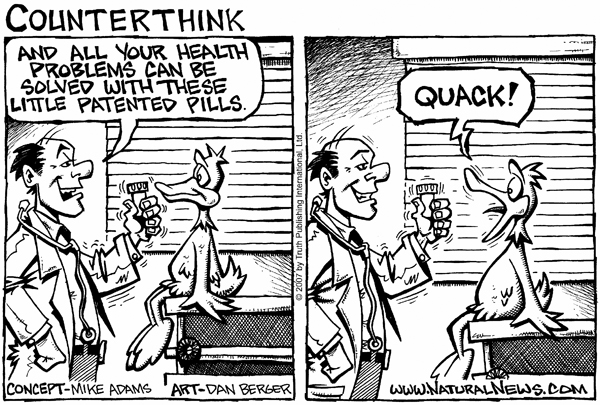
If you are taking such pills, please allow me to prove to you that you also probably don't need most of what you are taking under any circumstances and definitely less so if you make some tweaks to your diet.  As the cartoon above humorously depicts (this was proved in actual study conducted by Cornell University), marketing can be very persuasive. Don't let the supplement marketers and their TV pitchmen have their way with you.  I'm not sure they really have your best interests at heart.

Sunday, June 24, 2012

Take This With A Grain of Salt...


Iodine is not something Americans often discuss, but maybe they should more often. 

Iodine is an essential trace element needed for humans to sustain life because of its main role is as a constituent of the main thyroid hormones, thyroxine (T4) and triiodothyroxine (T3).  The thyroid gland needs no more than 70 micrograms per day of iodine to synthesize the requisite amounts of T4 and T3, but higher amounts (~150 micrograms per day) are needed for optimal function of a number of body systems, including milk-producing breasts, the lining of the stomach, the salivary glands and lining of the mouth, your thymus that produces you’re the key cells of the immune system, your skin, etc.

Worldwide, iodine deficiencies are common and can cause brain development issues. That is why here in the U.S., even though seafood is a good source of iodine, the government requires that our table salt be iodized (iodine is added) so the American public can maintain healthy levels of this essential element. 

That’s great except there is one problem. Just like with the warnings to avoid sun exposure to avoid skin cancer has increased Vitamin D deficiencies, warnings to avoid salt may be causing iodine deficiencies.  The problem is that very few doctors these days test for iodine deficiencies.  I did the other day for the first time.

Let me tell you why I ordered this rather uncommon test.  A patient came to me complaining of fatigue.  As part of the work-up for fatigue, I did what are called thyroid function tests (TFTs). These tests included measuring her T4, T3 and Thyroid Stimulating Hormone (TSH) levels. The tests came back slightly abnormal and as a next step, I ordered a test for thyroid antibodies, which if positive would further indicate thyroid disease. They also came back slightly positive. I then ordered a thyroid ultrasound scan to see what was going on with this patient’s thyroid and it came back negative.  I was confused as there were indications of thyroid disease, but the results were inconclusive. I decided it was best to refer the patient to an endocrinologist, the specialty doctor with expertise in endocrine diseases such as thyroid disease. 

However, before the patient left, I decided to test one more thing—her iodine level. I did so because I remembered that the patient had previously told me that due to her elevated blood pressure she had completely refrained from adding any salt to her diet for a number of years.  She also told me she had distaste for seafood.  I wondered if the combination of her refraining from salt and almost never eating seafood had prevented her from getting sufficient iodine in her diet.  The iodine test is uncommon and the results take five days before they are available. In the meantime, the patient had booked visits with two different endocrinologists, one who told her to take thyroid medicine (synthroid) for her thyroid disease and another who told her it was unnecessary because her thyroid was fine (no wonder I was unsure).

Meanwhile, the iodine test came back and guess what--that’s right, she had an iodine deficiency.  I immediately researched other natural sources for iodine beyond seafood and iodized salt, and found out that there were not many good sources (milk products and egg yolks are a source, but I don’t generally recommend consumption of them for other reasons).  Cranberries are another source, but not a great one.   

So, given my unease with starting her on a iodine pill that can have some nasty side-effects,  I suggested that she should instead add a teaspoon of iodized salt to her daily diet to correct the deficiency.  I will obviously need to watch her blood pressure due to the added salt, but I hope this will correct her iodine deficiency and return her thyroid hormones to completely normal levels.

It's often said that when doctors hear hoof-beats, they should think of horses not zebras. In the case of abnormal thyroid tests and fatigue, checking iodine levels may actually turn out to be a horse.

Friday, June 22, 2012

Pressure Rising...

Although the rising obesity epidemic has become a hot topic, it should not be the only widespread concern. There is another health phenomenon that does not get enough attention. It is the incidence of high blood pressure, or hypertension (HTN). The most common reference to high blood pressure usually comes in the form of warnings to curtail your salt intake.

While salt levels in your blood stream are one mechanism that affects your blood pressure, it is not alone.

Here's a quick primer on high blood pressure and its common causes.

It all starts with your heart and your arterial blood vessels. HTN is affected by how your heart is pumping, how much it is pumping, and what it is pumping against. So if your arteries, which are the blood vessels your heart pushes blood through to get it to your organs, are narrowed because of arteriosclerosis or spasm, your pressure goes up. If your blood volume is increased because of water retention, your pressure also goes up.

Blood pressure is also affected by neurological systems called the autonomic system, which is controlled by the brain.  Although it's role is not perfectly understood regarding its contribution to HTN, it is known that the system can raise and lower your blood pressure by sending signals to blood vessels to narrow or dilate. This system is also called the "fight or flight" system because it controls your body's reaction to external factors.

Your kidneys are believed to play a major role in HTN. First, kidneys regulate fluid balances in your body by controlling how much fluid and salt is excreted to maintain a good circulating fluid volume. If you ingest more salt, the kidneys are suppose to excrete more salt to keep the balance.

The kidneys also release a hormone and enzyme called renin, which perhaps plays a very significant role in fluid maintenance and blood vessel control as part of the renin-angiotensin-aldosterone axis. This axis is the body's system that ultimately controls one of the kidney's main functions--to excrete excess sodium and potassium. The amount of two elements in your body affects how much water the body retains. This axis also controls the flexibility of blood vessels walls and has the ability to narrow the blood vessel when beneficial to the body. Obviously, if the system malfunctions and blood vessels narrow inappropriately, this can cause HTN.

HTN is deadly to your body because of the extra strain it puts on your always pumping heart to work harder. This can lead to the growth of heart-muscle, which is not a good thing. As the heart works harder, it can grow larger and actually become flabby and dysfunctional. Untreated, this often leads to heart failure and eventual death.

So when a doctor confronts HTN, the first instinct, if not rule, is to lower it with medication(s) to prevent any damage. There are many types of medications to treat HTN, including diuretics which simply cause the kidneys to excrete more fluid, calcium channel blockers,beta-blockers, vaso-dilators etc.  Unfortunately, many doctors do not effectively address many of the root causes of the rising blood pressure such as stress, eating the wrong foods and avoiding the right ones, weight gain, etc. This brings to mind one of my favorite childhood anecdotes.

My father drove an old car and one day a red light went on in the dashboard. We drove to a gas station and my father asked if they could address the problem. They said sure, we can "disconnect the red light."  It seems that when it comes to high blood pressure, doctors often disconnect the red light with medication rather than address why the red light went on in the first place.

This morning, I received an email from a website called REALAGE.com.  The website is now owned by sharecare.com, which is partially owned by Dr. Oz (yes, him again).  Clicking on the link and probing around the website, I found an article titled Reduce High Blood Pressure with Yogurt. The article claims that yogurt and low fat dairy can reduce high blood pressure. To quote the article, "In a recent study, a diet that was rich in low-fat dairy seemed to help curb the risk of high blood pressure by as much as 31 percent."

Wow, that sounds pretty good, but it couldn't be more misleading. I previously blogged about that study (Want Milk?, Friday April 20, 2012, http://mdprevent.blogspot.com/2012/04/want-milk.html). It showed that compared to eating dairy with a higher fat content, there was a decrease in blood pressure by eating low-fat dairy. The study did not look at how low fat dairy compared to no-fat dairy and no dairy altogether. Telling you something is the lesser of two evils without telling you what it is compared against I believe is misleading.

I guess by now, you may not be surprised that health information provided by anything connected to Dr. Oz may be misleading.  If you want to lower your blood pressure, learn what foods to eat and which to avoid, and most importantly get the right type of exercise, a good night's rest, and manage your stress effectively. All of these affect blood pressure. Either way, always consult a doctor if you have high blood pressure, rather than a website or TV show that may be misleading. Accurate information allows you to make informed choices. Isn't that what you want?

MDPrevent