Thursday, June 21, 2012

Don't Take Two Aspirins...

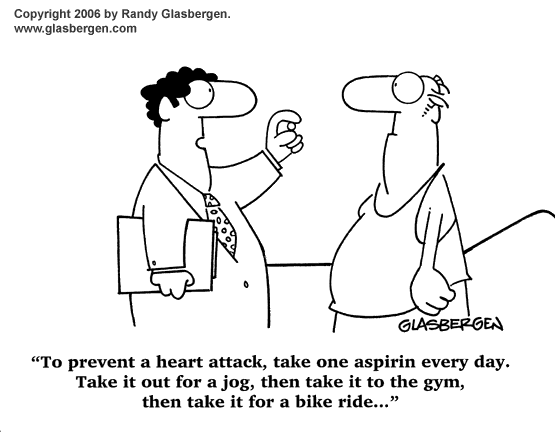
We all grew up with the old adage of "take two aspirins and call the doctor in the morning." This saying referred to the advice doctors often gave patients who bothered them by phone late in the day with what the doctor perceived to be a triviality that could wait until the next day or forever, for that matter. Today, when you try to call you doctor later in the day, you often get a voice message that states, if this is an emergency, please call 911 or go to the nearest emergency room. So was it good advice?

Clearly, aspirin is an effective enough fever reducer, pain reliever and anti-inflammatory medicine for mild ailments. However, it's hardly used for such purposes anymore because of superior medications such as acetaminophen (Tylenol) and ibuprofen (Motrin, Advil, etc.) and other non-steroidal anti-inflammatories (NSAIDS).  Aspirin began to decline in usage for pain and fever not only because of the more potent alternatives, but also because an increasing number of people were having allergic reactions to it and it was discovered that children (and some adults) were at risk of developing Reye's Syndrome.

Reye's Syndrome is a deadly disease that strikes quickly and can affect people of all ages without warning. It affects the entire body, but the brain and liver are the most harmed. Although the exact cause and cure are unknown, there appears to be a link between it and aspirin and other salicylate containing medications, and it seems to affect people who have had a chicken pox infection at some point. As the use of aspirin declined, the incidence of Reye's Syndrome has also markedly declined to very rare occurrences. It should stay that way.

More recently, aspirin has regained center stage due to its anti-platelet, anti-clotting abilities. It has also been linked to possible benefit in reducing the risk of colon cancer.  Unfortunately, it also is responsible for most bleeding episodes in the U.S. and is reported to be among the top four reasons for emergency room visits. The bleeding risks are increased by concomitant use of other NSAIDS, and unfortunately, enteric-coated aspirin, does NOT appear to decrease the bleeding risk.  Aspirin can also cause gastric ulcers, and I can confirm that from personal experience.

Therefore, the recommendation to consume a baby aspirin (81mg) to prevent blood clots must therefore be balanced against the risk for bleeding, ulcer formation, and the long-shot Reye's Syndrome. A thorough discussion with your doctor can determine if it is the right choice for you based on your risk factors for blood clots. Taking it on your own would not be advised.

That's what most doctors agree is the prudent course, but then again Dr.Oz is no longer like most doctors. An article appearing in this week's People magazine quotes him as saying that everyone should take two baby aspirins every day. Without knowing your risk factors and apparently throwing caution to the wind, he appears to ignore the risk factors for bleeding and ulcers and continues to make this foolhardy recommendation. Sometimes he recommends a fluid with it, but I have heard him say on his show to take aspirin without mentioning the need for fluids. Fluids are said to decrease the corrosive nature of aspirin on the lining of your stomach. I wish he would add at least a whisk of caution to his recommendation, if not stop it altogether.

By the way, you may ask, why do I keep writing about Dr. Oz?  As I've said before, it's because he's everywhere I turn (everyone turns) and quoted widely. His words are taken seriously by many people and I fear for the consequences.

A reporter for a Canadian major newspaper, whom I wrote about previously and spoke to the other day, told me that when she was among other reporters interviewing Dr. Oz when he visited Canada, she was the only reporter who did not get a hug because she asked him tough questions he apparently didn't appreciate.  Her conclusions after interviewing him is that he rationalizes promising miracle cures and magic pills (which he knows don't exist) and pushing products that are potentially harmful by telling himself that people need false hope and emotion to drive change.

I say people need good information to make good choices in consultation with their doctors. On that point, Dr. Oz and I seem to be diametrically opposed and that is why I keep trying to educate the public. 

MDPrevent

Wednesday, June 20, 2012

Need Another Reason Not To Trust What You Read On The Dr. Oz Show Website?


This past Monday, I wrote a blog about the wastefulness of the NMR LipoProfile test recommended by Dr. Mark Hyman during his PBS appearance (and on his website and I suspect in his new book, etc.). He emphatically advocated for the test because he felt that it was an essential tool to identify people at risk for heart attacks. I opined that it was another expensive test expected to provide little additional information for most people.

Alas, along comes a new study that merits attention. According to the study, performed by John Danesh, FRCP, of the University of Cambridge in England, and colleagues belonging to the Emerging Risk Factors Collaboration, there was only slight improvements in cardiovascular risk prediction gained by adding more blood lipid-related markers to conventional factors. In fact, fewer than 5% of individuals would have their risk classifications changed by including such new markers.

According to the researchers, adding more lipid markers to the risk prediction equation brought, at best, only "slight improvement." The research, published in the June 20 issue of the Journal of the American Medical Association, showed that replacing the standard blood tests used today to determine cholesterol levels and cardiac risk markers with these new lipoprotein-associated factors reduced the accuracy of risk prediction.

In practical terms, this study showed it would be necessary to test from 800 to 4,500 individuals for these lipoprotein markers in order to prevent one major cardiovascular event over 10 years. Now that sure seems like a waste of time and money because even if you test positive, it doesn't assure that you will do anything different in terms of lifestyle or treatment. Even if you add a statin, there is no guarantee it will prevent a heart attack because plenty of people who take statins still have heart attacks. The key to good heart health remains lifestyle and you should live a healthy one regardless of what a doctor or diagnostic test tells you.


The NMR LipoProfile offers three case studies to support their product. Not surprising that the first case study, described as an overweight man, was found to be at greater risk of having a major cardiovascular event based on the test. Duh! Being overweight is clearly a risk factor and you don't need an extra blood test for confirmation.

The take-away here is the usual one. Don't wait for blood tests and diagnoses to force you to take stock of your life and make the changes that will both improve the quality of your life today and your enjoyment of life for years to come. Remember, the longer you live, the healthier you've been.

So once again, I searched the Dr. Oz website to see what it had to say on this matter and of course, there is a posted article written by Dr. Hyman strongly supporting this test.  Imagine that? 

Tuesday, June 19, 2012

We All Can Use A Little Help Sometimes...


I have always been a fan of psychologists. When I was in college, I was very distraught over a family situation. In a mere fifteen minute session, a college-based psychologist gave me advice that served me profoundly well. Sometimes, we get so lost in our heads that we need someone, trained and professional, to help us get some clarity. I did that day and it made me a believer.


Psychologists, particularly those with a PhD, spent as much as ten years, including postdoctoral internships and fellowships, getting the full range of their intensive education, and they can make a huge difference in your life.

That is why, before MDPrevent had it first patient, I hired a full time health psychologist for our team. Her name is Dr. Jessica Kordansky and patients rave about her. She offers the full range of health psychology services and also leads our Mindfulness Meditation classes each week.

What is a health psychology? It is a field of psychology concerned with understanding how biological, psychological, environmental, and cultural factors are involved in your physical health and illness. In other words, it takes all aspects of your life into consideration to help you maintain the best possible emotional and mental health. It helps you develop strong coping mechanisms to deal with the inevitable stress and anxiety that seems to accompany most people as they age.

New Study

Why do these matter? A recent population-based study showed that individuals scoring higher on a measure of general mental health had an increased risk of stroke mortality. Psychological distress predicted a significant 66% elevated risk of death from cerebrovascular disease, according to Mark Hamer, PhD, of the University College London. It's really simple. Stress kills.


"These [new] data suggest that the cardiovascular effects of psychological distress are not limited to coronary artery disease," Hamer's group wrote.

Scientists know one of the mechanisms by which stress kills is by shortening your telomeres, which are the tails of your chromosomes. Each time your cell divides, your telomere shortens and eventually when it reaches a certain length, the cell dies. Stress accelerates this process. Another mechanism by which stress induces great harm is by its affect on your blood pressure. Increased blood pressure damages both your heart and vascular systems thereby increasing your risk for stroke and heart attack.


I think that the overwhelming majority of patients would benefit from one-on-one time with a health psychologist.   It seems that as we live our lives, we accumulate a lot of mental baggage and it gets really crowded in our heads making and keeping sense of it all. A health psychologist can help you sort out the things that you should stop thinking about because they are not meaningful, the things that you need a plan to address, such as your finances, and the things that you can't stop thinking about, such as your children, that you can't change, but need a effective and useful way to cope with it.

I often quip that smart people always take advantage of psychological counseling because I learned in medical school from a family friend who worked in a local mental health center that many of my fellow medical students were taking advantage of the service available to us. I also once heard that Newton, Massachusetts, where I lived for ten years, has the highest per capita rate of counseling anywhere in the U.S. It's not surprising because it is also home to some of the smartest people in the country who are professors and doctors at local universities such as Harvard, MIT, Tufts, Boston University, Boston College, Wellesley, Brandeis, etc.


The best part of health psychology is that it is covered by Medicare and most other insurances.  So if you find yourself believing that your "thoughts are facts," which they are usually not, and would like to get some stress reduction, better sleep, less anxiety, and an overall better handle on life, maybe it's time you spoke to a health psychologist? At a minimum, it may help you avoid a stroke.

There are many excellent health psychologists. I am impartial and think I have one of the best, who by the way trained at Emory University. If you are interested in speaking with Dr. Kordansky, you may reach her at (561) 807-2561.

Either way, if stress, anxiety, difficulty sleeping, strained relationships, loneliness, depression, or anything else is affecting your health or your life, consider speaking to someone. It doesn't really matter why, but if you you think you would benefit from such support, you should do so because we can all use a little help sometimes...


Monday, June 18, 2012

Dr. Oz and Dr. Hyman Make Quite A Pair of Showmen!

The other night, I happen to catch Dr. Mark Hyman on a local PBS affiliate. Having heard Dr. Hyman speak at the American College of Preventive Medicine conference in February 2012 in Orlando to a group of doctors, I was keen to hear what he had to say to a layperson TV audience.

It started out innocently enough. He spoke about the dangers of diabetes and obesity, the need to eat well, get plenty of exercise, etc.  Then the garbage started. He started touting the need for special blood tests like the NMR LipoProfile test for cholesterol particle size, the need for a special blood test to identify insulin resistance, and the need for everyone to take dietary supplements. My recollection of his speech at the convention to doctors was that he made no mention of the need for these tests or for dietary supplements (other than to me when I questioned him about his own usage).

I'm not surprised that he didn't do so in front of a sophisticated audience; but, I was flabbergasted why he was now singing another tune to a raptly attentive and susceptible TV audience. I didn't have to wait long for my answer. As the show ended, there was a reference to organizations that had helped fund the show.  Among the sponsors were NMR LipoProfile, the company that sells the cholesterol test, and Metagenics, a company that sells supplements.

I was so disappointed that Mark Hyman had essentially sold out his audience. People don't need more blood tests than the conventional tests to tell them that they have a cholesterol or blood sugar problem. Does it really matter if you have a 33% versus a 38% relative risk of developing diabetes or heart disease? Either way, you should make lifestyle changes to avoid them.

These tests are by and large, in my opinion, just plain ridiculous and unnecessary and they only serve to line the pockets of the companies that sell the tests and the doctors who order them with reckless abandonment.  Patients don't need more tests from doctors; they need more time, guidance, and support from them. In my opinion, for whatever it's worth, Mark Hyman is another doctor gone astray by the lure of fame and money.

Of course, he's not the first, and he's not alone. He has his good friend Dr. Oz to keep him company.

Today, I was contacted by a Canadian reporter doing a story on Dr. Oz. She let me know that she had cited my blog in a previous story she wrote about Oz and directed me to the story.

I have often wondered if Dr. Oz actually believes it when he says that a supplement he promotes is as good as he claims or it is all showmanship. If the Dr. Oz quote from her article is accurate, it appears that he doesn't truly believe in his "miracle cures" and "magic pills." For example, in regards to raspberry ketones, he believes that it may have, at best, a marginal benefit.  He is actually quoted as saying that raspberry ketones have the value of a "nudge."  A "nudge" does not quite match the characterization of raspberry ketones as an amazing weight loss product as he claimed on his show.

The article goes on to reveal Dr. Oz's main excuse for pushing so many different products on an unsuspecting audience--which is to give people hope. After reading the article, I can only conclude that he makes such pronouncements at best to make himself seem like  a savior by giving people hope, albeit false hope at that, and at worse to make some money by promoting the sale of a product.  

Read his own words in describing himself. I couldn't make this up:

"There are three words to describe what I do. I’m a doctor. This comes from the Latin docere, teacher. I’m a physician, which comes from the Latin, physica, science. I’m a medicine man, which means healer. To help someone else, you have to have science, you have to be able to heal, and you have to be able to teach. They all work together. In Western medicine, we put a disproportionate (emphasis) on the science part."

Did he really say a "disproportionate (emphasis) on the science part." Really? What should we rely upon when it comes to your health? Opinions? Anecdotes? Marketing? 

Here's another Latin word that seems to be lacking in Dr. Oz's vernacular.  It's veritas, which means truth. Used in the motto of many leading universities including Harvard, Yale and Duke, it is the essence of education to seek and find truth.  If he were a true teacher, he would espouse the truth. It is a shame that Dr. Oz feels his audience doesn't deserve or can't handle the truth.  Instead, he gives them false hopes in the name of good TV and money-making.

May I speak for others when I say we all would like some veritas from Oz and Hyman if they wish to be considered true teachers?

Wednesday, June 13, 2012

You Can't Beat Breakfast!


The past few weeks I’ve reported on a number of studies related to preventing diabetes.

1.      Pre-diabetics who exercise at least 150 minutes a week can restore their dysfunctional blood vessels to normal; they get twice the improvement than seen with diabetics.
2.      A second study showed that a change of lifestyle that restores fasting blood sugar at least once in 3 years to a normal level below 100 mg/dl markedly decreases the probability of progression to diabetes.

Here’s a third study to give cheer about.

It has long been a staple of good nutritional advice to regularly consume breakfast. At MDPrevent, we practically shout it from the rooftops.  Still, there has been little research on the relationship between morning eating habits and developing diabetes -- until now.

3.      Eating breakfast is associated with a decreased chance of developing type 2 diabetes according to results of a new study presented by Andrew Odegaard, PhD, an epidemiologist at the University of Minnesota, Minneapolis at a poster session at the American Diabetes Association (ADA) 72nd Scientific Sessions.

The studied showed that for each additional day per week of breakfast intake, there was a 5% decreased risk of developing diabetes. When comparing participants who ate breakfast between 0 and 3 times per week and those who ate breakfast 5 times or more, the more frequent consumers had a 31% reduction in diabetes risk.

Still, there was even more good news. Paradoxically, the more regular breakfast eaters also gained less weight.  Now that’s having your breakfast and eating it too!

Even though those with superior diet quality had lower incidences of diabetes, it proved out that breakfast frequency was a more significant factor as it was shown to be more predictive of diabetes risk even when comparing different types of diets.  Now that doesn’t mean that butter pancakes, loaded with whipped cream and caramel are okay for breakfast.  It does mean that a healthy breakfast is both a great way to reduce your diabetes risk and start a wonderful day.

By the way, I start the day with the exact same breakfast every morning, which I try to consume within 90 minutes of awakening.  It’s comprised of a bowl of fresh blueberries, an added sliced banana, a combination of organic whole grain, high fiber, and low simple carbohydrate cereals, seduced with a cup of unsweetened almond milk. Yum, yum, yum.  I’m never hungry until lunch. Sweet!

Dr. Oz's Vitamin D Recommendation Doesn't Hold Up To USPSTF Review


Yesterday, a patient came to see me again because she was concerned that I had recommended that she stop supplementing with Vitamin D. I had previously told her that she should get her Vitamin D (and fish oil) naturally from eating Wild Alaskan Salmon and other fish rich in Omega-3 fatty acids such as halibut, cod, sardines, anchovies, herring, etc. at least three times a week, and from fortified foods such as unsweetened almond milk.

She had just been to another doctor for the thyroid disorder I had diagnosed who suggested she reinstate her taking Vitamin D. She wasn't happy in general with this particular endocrinologist, but wanted to discuss what to do next with her thyroid disease and his advice about Vitamin D.

I explained again that my recommendation was based on the prevailing science and the fact that she had a very good level of Vitamin D based on her bloodwork.

As fate would have it, in a draft recommendation released yesterday, the United States Preventive Task Force (USPSTF), confirming my recommendation, said there is no value for postmenopausal women in taking supplements up to 400 IU of vitamin D and 1,000 mg of calcium.

The USPSTF also found the evidence too scant to draw conclusions about vitamin D supplements, at any dose and with or without calcium, for cancer prevention in adults.

It was based on an evidence review finding that "in postmenopausal women, there is adequate evidence that daily supplementation with 400 IU of vitamin D3 combined with 1,000 mg of calcium carbonate has no effect on the incidence of osteoporotic fractures. However, there is inadequate evidence regarding the effect of higher doses of combined vitamin D and calcium supplementation on fracture incidence in postmenopausal women."

At the same time, the USPSTF found, doses at or below 400 IU of vitamin D and 1,000 mg of calcium increase the risk of kidney stones, albeit to a small degree.

But with no benefit from the supplements, even the small risk of harm is enough to tip the balance against them at these low doses, the group indicated.

The bottom line is there are no clear benefits of taking Vitamin D and calcium supplements and you can get all the Vitamin D your body needs, in the absence of deficiency, from natural sources including sun exposure, Wild Salmon, other fishes, etc.

Nevertheless, Dr. Oz repeatedly recommends Vitamin D as a top anti-aging supplement.

What are you going to follow: Science or marketing?

MDPrevent

Tuesday, June 12, 2012

Can We Prevent Aging? National Institute of Aging Speaks


On Sunday, I wrote that I would soon discuss reseveratrol. Resveratrol was one of the products that Dr. Oz had inappropriately touted last week as an anti-aging dietary supplement.

Here’s an excerpt from his website about resveratrol:

“You can further protect your body from the harmful effects of inflammation by taking a resveratrol supplement. Resveratrol is a compound found in plants such as the Japanese knotweed, blueberries, peanuts, red grape skins, and others. While resveratrol has been recommended for fighting the physical effects of aging, a brand new study shows it reduced inflammation of the heart in the study's participants by 26%. Taking one 500 mg capsule of resveratrol daily with food will help you maintain a strong, healthy heart.”

By the way, after an hour of searching, I can find no reference to any human “brand new study” regarding resveratrol. In fact, if you examine his words carefully, he doesn’t refer to humans. He only refers to ”participants.” How misleading is that?

After initiating my research into the facts about resveratrol, yesterday, I received a publication from the National Institute of Aging, part of the National Institutes of Health, titled ‘Can We Prevent Aging?’
 

This publication offers a succinct review of all the current “anti-aging regiments available to us beyond a healthy lifestyle. It’s a fairly long publication, so I’ve taken the liberty to excerpt certain key sections under headings that I think would be helpful to my patients.

The headings include:

Antioxidants
Resveratrol
Hormone Therapy and “'Anti-Aging' Supplements”
Hormone Replacement Therapy
Testosterone
Bioidentical Hormone Therapy
Dehydroepiandrosterone, or DHEA

If you read anything I’ve sent you, read this. It’s an excellent up to date summary of the science regarding a number of popular, but unproven methods to decrease or reverse aging. For those of you who don’t have the time or inclination to read it, here’s the National Institute of Aging’s summary:
Until more is known about antioxidants, resveratrol, and hormone supplements, consumers should view these types of supplements with a good deal of caution and doubt. Despite what advertisements on television, the internet, and magazines may claim, there are no specific therapies proven to prevent aging. Some harmful side effects already have been discovered; additional research may uncover others.


On Antioxidants:
Antioxidants protect the body from the harmful effects of by-products known as free radicals, made normally when the body changes oxygen and food into energy. The discovery of antioxidants raised hopes that people could slow aging simply by adding them to the diet. So far, studies of antioxidant-laden foods and supplements in humans have yielded little support for this conclusion. Further research, including large-scale epidemiological studies, might clarify whether dietary antioxidants can help people live longer, healthier lives. For now, although the effectiveness of dietary antioxidant supplementation remains controversial, there is positive evidence for the health benefits of fruits and vegetables.

On Resveratrol:
In one study, scientists compared two groups of overweight mice on a high-fat diet. One group was given a high dose of resveratrol together with the high-fat diet. The overweight mice receiving resveratrol were healthier and lived longer than the overweight mice that did not get resveratrol. In a follow-up study, researchers found that, when started at middle age, resveratrol slowed age-related deterioration and functional decline of mice on a standard diet, but did not increase longevity. A recent study in humans reported that resveratrol may have some similar health benefits to those in animals; however, it is still too early to make any definitive conclusions about how resveratrol affects human health and aging. More research is needed before scientists know if there is a proper and safe dose of resveratrol or if it has any clinical applicability in people.


On Hormone Therapy and “'Anti-Aging' Supplements”:
Higher concentrations of hormones in your body are not necessarily better. And, a decrease in hormone concentration with age is not necessarily a bad thing. The body maintains a delicate balance between how much hormone it produces and how much it needs to function properly. Natural hormone production fluctuates throughout the day. That means that the amount of hormone in your blood when you wake up may be different 2, 12, or 20 hours later.
If you take hormone supplements, especially without medical supervision, you can adversely affect this tightly controlled, regulated system. Replacement or supplemental hormones cannot replicate your body’s natural variation. Because hormonal balance is so intricate, too much of a hormone in your system may actually cause the opposite of the intended effect. For example, taking a hormone supplement can cause your own hormone regulation to stop working. Or, your body may process the supplements differently than the naturally produced hormone, causing an alternate, undesired effect. It is also possible that a supplement could amplify negative side effects of the hormone naturally produced by the body. At this point, scientists do not know all the consequences.
Some hormone-like products are sold over the counter without a prescription. Using them can be dangerous. Products that are marketed as dietary supplements are not approved or regulated by the FDA. That is, companies making dietary supplements do not need to provide any proof that their products are safe and effective before selling them. There is no guarantee that the “recommended” dosage is safe, that the same amount of active ingredients is in every bottle, or that the substance is what the company claims. What you bought over the counter may not have been thoroughly studied, and potential negative side effects may not be understood or defined. In addition, these over-the-counter products may interfere with your other medications. NIA does not recommend taking any supplement touted as an “anti-aging” remedy because there is no proof of effectiveness and the health risks of short- and long-term use are largely unknown.”

On Hormone Replacement Therapy:
Here’s what scientists know:
  • Endometrial problems—While estrogen helps some women with symptom management during and after menopause, it can raise the risk of certain problems. Estrogen may cause a thickening of the lining of the uterus (endometrium) and increase the risk of endometrial cancer. To lessen these risks, doctors now prescribe progesterone or a progestin, in combination with estrogen, to women with a uterus to protect the lining.
  • Heart disease—The role of estrogen in heart disease is complex. Early studies suggested MHT could lower postmenopausal women’s risk for heart disease—the number one killer of women in the United States. But results from the NIH Women’s Health Initiative (WHI) suggest that using estrogen with or without a progestin after menopause does not protect women from heart disease and may even increase their risk.
In 2002, WHI scientists reported that using estrogen plus progestin actually elevates some postmenopausal women’s chance of developing heart disease, stroke, blood clots, and breast cancer, but women also experienced fewer hip fractures and cases of colorectal cancer. In 2004, WHI scientists published another report, this time on postmenopausal women who used estrogen alone, which had some similar findings: women had an increased risk of stroke and blood clots, but fewer hip fractures. Then, in 2007, a closer analysis of the WHI results indicated that younger women, ages 50 to 59 at the start of the trial, who used estrogen alone, had significantly less calcified plaque in their coronary arteries than women not using estrogen. Increased plaque in coronary arteries is a risk factor for heart attacks. Scientists also noted that the risk of heart attack increased in women who started MHT more than 10 years after menopause (especially if these women had menopausal symptoms). There was no evidence of increased risk of heart attack in women who began MHT within 10 years of going through menopause.
  • Dementia—Some observational studies have suggested that estrogen may protect against Alzheimer’s disease. However, testing in clinical trials in older, postmenopausal women has challenged that view. In 2003, researchers leading the WHI Memory Study (WHIMS), a substudy of the WHI, reported that women age 65 and older who took one kind of estrogen combined with progestin were at twice the risk for developing dementia compared to women who did not take any hormones. In 2004, WHIMS scientists reported that using the same kind of estrogen alone also increased the risk of developing dementia in women age 65 and older compared to women not taking any hormones. What possibly accounts for the different findings between the observational and clinical studies? One central issue may be timing. The women in the WHIMS trial started treatment a decade or more after menopause. In observational studies that reported estrogen’s positive effects on cognition, the majority of women began treatment soon after menopause. This has led researchers to wonder if it may be advantageous to begin treatment earlier, at a time closer to menopause. Additionally, it appears that progesterone and progestins (progesterone-like compounds) differ in their impact on brain health.
Despite research thus far, there are still many unknowns about the risks and benefits of MHT. For instance, because women in their early 50’s were only a small part of the WHI, scientists do not yet know if certain risks are applicable to younger women who use estrogen to relieve their symptoms during the menopausal transition.


On Testosterone:
“The bottom line: there is no scientific proof that testosterone treatment in healthy men will help them age better. Until more scientifically rigorous studies are conducted, it is not known if the possible benefits of testosterone therapy outweigh any of its potential risks. NIA continues to conduct research to gather more evidence about the effects of testosterone treatment in aging men.”

On Bioidentical Hormone Therapy:
“Large clinical trials of these compounded hormones have not been done, and many bioidentical hormones that are available without a prescription are not regulated or approved for safety and efficacy by the FDA.”

On Dehydroepiandrosterone, or DHEA:
“[S]ome proponents claim that over-the-counter DHEA supplements can improve energy and strength and boost immunity. Claims are also made that supplements increase muscle and decrease fat. To date, there is no conclusive scientific evidence that DHEA supplements have any of these benefits.
The conversion of naturally produced DHEA into estrogen and testosterone is highly individualized. There is no way to predict who will make more or less of these hormones. Having an excess of testosterone or estrogen in your body could be risky.
Scientists do not yet know the effects of long-term (defined as over 1 year) use of DHEA supplements. Early indications are that these supplements, even when taken briefly, may have detrimental effects on the body, including liver damage.”
“Researchers are working to find more definite answers about DHEA’s effects on aging, muscles, and the immune system. In the meantime, if you are thinking about taking DHEA supplements, be aware that the effects are not fully known and might turn out to cause more harm than good.”


Conclusion:
Until more is known about antioxidants, resveratrol, and hormone supplements, consumers should view these types of supplements with a good deal of caution and doubt. Despite what advertisements on television, the internet, and magazines may claim, there are no specific therapies proven to prevent aging. Some harmful side effects already have been discovered; additional research may uncover others.

I  hope this information has been helpful and as always, please feel free to share your comments.