Showing posts with label exercise. Show all posts

Monday, February 25, 2013

How Much Exercise Does One Need?

Everyone agrees that physical activity is a key part of a healthy lifestyle. Yet, there is no absolute consensus as to what is the best form of such activity and how much activity provides the most benefit. For example, does one need to set aside specific time for exercise each day or does a physically active lifestyle such as gardening or playing golf suffice? Before, I share a new study that may shed some light on this question, let's just review some basic information.

There are four types of exercise: endurance, strength, balance and flexibility. By endurance, we mean what is commonly referred to as cardio or aerobic. By strength, we often refer to anaerobic or weight bearing. All four forms of exercise confer specific benefits for healthy living. But how much do we really need and what are the benefits?  Is 60 minutes better than 30 minutes and 90 minutes better than 60? Is it better to do more intensive exercise for a shorter period of time or less intensive for a longer duration? Is endurance better or more important than strength? The answers depend on what your goal is. If your goal is longevity than the answer may be different than if your goal is to have more pronounced muscles.

For many years, doctors have been more comfortable prescribing medication than an exercise routine. That may be about to change. A new study from the Harvard School of Public Health now offers doctors specific exercise prescriptions. In the study led by I Min Lee, a professor of medicine at Harvard Medical School, researchers analyzed data of more than 650,000 people older than 40 who were followed for an average of ten years.

Here's what they found:
1. Subjects that completed the equivalent of 75 minutes of brisk walking each week--roughly 11 minutes per day--lived 1.8 years longer than those who did not exercise at all.
2. Subjects that completed the equivalent of 150 minutes (as federally recommended) of brisk walking each    week--roughly 22 minutes every day or 30 minutes five days a week day--lived 3-4 years longer.
3. The benefits plateaued at about 43 minutes of brisk walking a day.

The noted gains applied to people at all weight levels, including the obese. This means that even if weight was not lost, the benefits of exercise were still realized.

The researchers focused on brisk walking because it is the most commonly reported exercise, but any moderate intensity exercise, from riding a bike, doing gardening and yard work, running around with the kids, would be just as good. The only requirement is that you get your heart rate beating to a level where speaking is still comfortable, but singing becomes difficult (that means hard for you to sing, not for people to hear you sing.)

The researchers also concluded that those who engage in more vigorous exercise, say running or playing basketball, enjoyed the same gains but in half the time. In other words, the benefits of vigorous exercise plateaued at 21.5 minutes per day for the more intense exercisers. In fact, a previous study showed that women who exercise 60 consecutive minutes a day actually burned fewer calories over the entirety of the day than those who only exercise for 30 minutes. Combining the two studies, we can extrapolate that too much exercise may be counterproductive. That said, moving around all day, as opposed to sitting for large parts of it, is known to confer many benefits.  From my perspective, I advise patients in general to do five minutes of moderate activity for about eight or nine hours during the day. I believe, although it has not yet been proven scientifically, that this will confer the most benefit.  As always, follow the advice of your physician who knows your personal medical history and limitations.

This new study is not the final say on exercise as it only addressed longevity, but it offers an excellent guideline for improving your longevity. As other recent studies have shown, exercise may also help prevent dementia and even cancer. So if you have been sitting reading this blog, may I suggest you now get up and get moving. It will probably extend your life.


Sunday, February 10, 2013

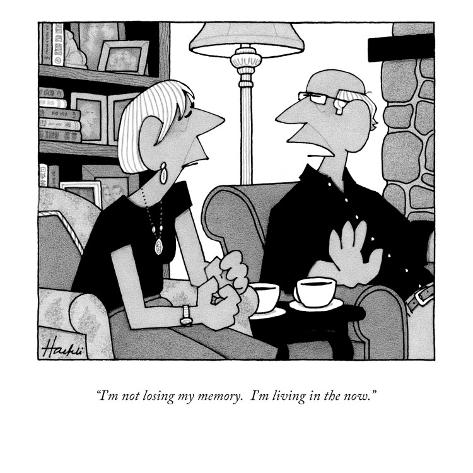
If You Jump Up and Down After Reading Today's Blog, You May Actually Remember It When You Get Older!

It won't come as news to anyone that exercise helps you stay fit and being fit is good for your health. It also probably won't come as a surprise that being fit is good for your mood. But what about memory? Will exercise preserve memory? Does being fit earlier in life affect what happens many years later? Will being fit prevent Alzheimer's and other forms of dementia?

Until now, scientists have had strong suspicions that lifestyle plays a meaningful role in preserving healthy brain function, but they didn't know for sure. A new study just came along that moves the needle along in validating the key role that exercise plays in prevention.

Published in the February 5, 2013 issue of the Annals of Internal Medicine, the study titled "The Association Between Midlife Cardiorespiratory Fitness Levels and Later Life Dementia" was a cohort study that does not prove cause and effect but deserves close attention. The study performed at The Cooper Institute in Dallas Texas involved 19, 458 middle aged people who had a treadmill exercise test as part of health care preventive visit. Based on the amount of time that a person was able to run on the treadmill, researchers grouped them into two categories of most fit and least fit. They then followed these people for many years, beyond the time they reached 65 years, to see who developed dementia.

What did they find? You guessed it. The people in the most fit group were far less likely to develop dementia. Although the study did not look at diet, which is obviously an important contributing factor to health, and was limited to mostly healthy white people, it does offer possible evidence of an association between fitness and memory preservation.  Again, the study did not prove cause and effect but it does provide yet another reason to stay fit by being physically active.


While only 1 out of 8 Americans develop dementia by the age of 65, that number rises to 3 out of 7 by age 85. Although that represents less than half of those over the age of 85, no one, but the most cynical, would disagree that it would be better to avoid dementia than experience it.  It's no fun to lose your memory. Just ask anyone who suffers from a form of dementia or watched a loved one die from it. The good news is that science suggests that if you get to age 90 without developing dementia, the probability of development appears to decrease due to possible suppression of the gene responsible for it.

So if you are sitting down when you read this, it may be a good idea to get off your seat and jump up and down.  If you keep doing that long enough and as often as possible, you may remember this blog for many years to come. That would be nice, right?

Nu? So what are you waiting for? Get up and get moving! Now, before you forget how important it is to your future memory...

Tuesday, August 7, 2012

The Only Thing I Know For Sure Is That We Need To Keep Learning

About 30 years ago, I read an article about agriculture that had a profound impact on my thinking. The article was about soil erosion and basically stated that what had long been considered an incontrovertible truth about how to avoid soil erosion turned out to be the exact opposite. The idea that something held as an absolute truth could prove to be absolutely wrong has given me pause to think about such 'truths' to this day.

Thirty years later, a new study about exercise emerges that reminds me of what we consider absolute truths may not be so. For as long as I can remember, exercise has been associated with increasing your metabolism. It's been widely believed that exercise contributes to weight loss by burning calories and increasing your metabolism, which is believed to keep revving and burning calories even during the cool down phase.  While certain people argued that exercise was not an effective way to lose weight because they were unsuccessful losing weight despite much exercise, it was still a tenet of the weight loss movement. For example, Weight Watchers allows you to add extra "points" based on the amount of exercise you do.

The new study, which is a wonderful study, titled Hunter-Gatherer Energetics and Human Obesity, (http://www.plosone.org/article/info%3Adoi%2F10.1371%2Fjournal.pone.0040503) studied the Hadza tribe of hunter-gatherers in Tanzania. Strapping members of the tribe with a GPS device and having them swallow so-called doubly labeled water, a liquid in which the normal hydrogen and oxygen molecules have been replaced with versions containing tracers, researchers were able to quantify their levels of physical activity, energy expenditures and metabolic rates. What they discovered is groundbreaking!

The study showed that contrary to popular belief, exercise slows down one's metabolic rate so that calories burned are actually far less than expected.  What's amazing is that this is intuitive and yet for so long everyone believed otherwise. Think about it for a moment. If your body doesn't eat for several hours, we think (I'm now officially afraid to say anything for certain any more; well, maybe some things) your metabolic rate slows down as your body tries to conserve energy, as it doesn't know when energy will be replenished. Applying that same principle to exercise, when the body senses a loss of energy consumed by increased activity, it makes sense that it will slow down its burn rate to conserve energy.

This doesn't mean that you aren't burning calories and you can't lose weight by exercising. It simply means that you burn less than you think, which means don't think you can eat a lot more because you had a good exercise session.

By now you couch potatoes are turning to your spouses or friends and smugly telling them you were right all along about exercise. Well not so fast.  Exercise is still critical to good heart and brain health. Exercise keeps the heart functioning well and exercise has been shown to be as effective as anti-depressants in treating many cases of mild to moderate depression. But that's not all. Two new studies published online in the Archives of Internal Medicine support the tremendous impact of exercise on lowering the risk of death among diabetic patients, and that weight training may reduce the risk for the disease even without aerobic activity.

Quoting medpagetoday.com, "In a large prospective trial, moderately active patients with diabetes had a lower risk of total mortality compared with those who were completely inactive...according to Diewertje Sluik, MSc, of the German Institute of Human Nutrition in Potsdam, and colleagues. And in a separate prospective study, men who did weight training only at least 150 minutes per week had a 34% lower risk of developing diabetes to begin with ...according to Frank Hu, MD, PhD, of the Harvard School of Public Health in Boston, and colleagues."

I also previously wrote about a study that shows that exercise can return the inflexible blood vessels of pre-diabetics to normal as well.

So while exercise is not the great weight loss panacea it was once thought to be, it is still a critical component of a healthy lifestyle. Keep exercising, but more importantly, if you want to stay slim or lose weight avoid the four whites--white sugar, white flour, white pasta, and white rice. If you watched 60 Minutes this past Sunday, you now know that some scientists view sugar as toxic and cancer causing. Just another good reason to choose whole foods like fruits, vegetables, nuts, beans, and whole grains. And of course, don't forget my favorite, Wild Salmon.  Bon appetite!

Monday, June 18, 2012

Dr. Oz and Dr. Hyman Make Quite A Pair of Showmen!

The other night, I happen to catch Dr. Mark Hyman on a local PBS affiliate. Having heard Dr. Hyman speak at the American College of Preventive Medicine conference in February 2012 in Orlando to a group of doctors, I was keen to hear what he had to say to a layperson TV audience.

It started out innocently enough. He spoke about the dangers of diabetes and obesity, the need to eat well, get plenty of exercise, etc.  Then the garbage started. He started touting the need for special blood tests like the NMR LipoProfile test for cholesterol particle size, the need for a special blood test to identify insulin resistance, and the need for everyone to take dietary supplements. My recollection of his speech at the convention to doctors was that he made no mention of the need for these tests or for dietary supplements (other than to me when I questioned him about his own usage).

I'm not surprised that he didn't do so in front of a sophisticated audience; but, I was flabbergasted why he was now singing another tune to a raptly attentive and susceptible TV audience. I didn't have to wait long for my answer. As the show ended, there was a reference to organizations that had helped fund the show.  Among the sponsors were NMR LipoProfile, the company that sells the cholesterol test, and Metagenics, a company that sells supplements.

I was so disappointed that Mark Hyman had essentially sold out his audience. People don't need more blood tests than the conventional tests to tell them that they have a cholesterol or blood sugar problem. Does it really matter if you have a 33% versus a 38% relative risk of developing diabetes or heart disease? Either way, you should make lifestyle changes to avoid them.

These tests are by and large, in my opinion, just plain ridiculous and unnecessary and they only serve to line the pockets of the companies that sell the tests and the doctors who order them with reckless abandonment.  Patients don't need more tests from doctors; they need more time, guidance, and support from them. In my opinion, for whatever it's worth, Mark Hyman is another doctor gone astray by the lure of fame and money.

Of course, he's not the first, and he's not alone. He has his good friend Dr. Oz to keep him company.

Today, I was contacted by a Canadian reporter doing a story on Dr. Oz. She let me know that she had cited my blog in a previous story she wrote about Oz and directed me to the story.

I have often wondered if Dr. Oz actually believes it when he says that a supplement he promotes is as good as he claims or it is all showmanship. If the Dr. Oz quote from her article is accurate, it appears that he doesn't truly believe in his "miracle cures" and "magic pills." For example, in regards to raspberry ketones, he believes that it may have, at best, a marginal benefit.  He is actually quoted as saying that raspberry ketones have the value of a "nudge."  A "nudge" does not quite match the characterization of raspberry ketones as an amazing weight loss product as he claimed on his show.

The article goes on to reveal Dr. Oz's main excuse for pushing so many different products on an unsuspecting audience--which is to give people hope. After reading the article, I can only conclude that he makes such pronouncements at best to make himself seem like  a savior by giving people hope, albeit false hope at that, and at worse to make some money by promoting the sale of a product.  

Read his own words in describing himself. I couldn't make this up:

"There are three words to describe what I do. I’m a doctor. This comes from the Latin docere, teacher. I’m a physician, which comes from the Latin, physica, science. I’m a medicine man, which means healer. To help someone else, you have to have science, you have to be able to heal, and you have to be able to teach. They all work together. In Western medicine, we put a disproportionate (emphasis) on the science part."

Did he really say a "disproportionate (emphasis) on the science part." Really? What should we rely upon when it comes to your health? Opinions? Anecdotes? Marketing? 

Here's another Latin word that seems to be lacking in Dr. Oz's vernacular.  It's veritas, which means truth. Used in the motto of many leading universities including Harvard, Yale and Duke, it is the essence of education to seek and find truth.  If he were a true teacher, he would espouse the truth. It is a shame that Dr. Oz feels his audience doesn't deserve or can't handle the truth.  Instead, he gives them false hopes in the name of good TV and money-making.

May I speak for others when I say we all would like some veritas from Oz and Hyman if they wish to be considered true teachers?

Thursday, May 31, 2012

A New York State of Mind - Ban Soda!

The big health related headline today is that New York City is banning the sale of cups larger than 16 oz. of sweetened sodas. NYC's plan to enact a far-reaching ban on the sale of large sodas and other sugary drinks at restaurants, movie theaters and street carts, in the most ambitious effort yet by NY Mayor Michael Bloomberg to combat rising obesity.
The New York Times

"The proposed ban would affect virtually the entire menu of popular sugary drinks found in delis, fast-food franchises and even sports arenas, from energy drinks to pre-sweetened iced teas. The sale of any cup or bottle of sweetened drink larger than 16 fluid ounces — about the size of a medium coffee, and smaller than a common soda bottle — would be prohibited under the first-in-the-nation plan, which could take effect as soon as next March. 

The measure would not apply to diet sodas, fruit juices, dairy-based drinks like milkshakes, or alcoholic beverages; it would not extend to beverages sold in grocery or convenience stores."

Is this a good thing? I am reluctant to criticize any measure or effort to combat obesity, but I am on the fence here. If this is merely the next salvo in the battle to incrementally decrease the consumption of unhealthy food by bringing attention to it and making its consumption more labor intensive, I vote thumbs up.  I applaud Mayor Bloomberg's desire to do something that is readily available to him without getting legislative consent.

My issue is that while sweetened sodas and drinks are an easy path to consumption of unhealthy calories, they may drive higher consumption of unhealthy fruit juices and smoothies (concentrated with fructose), which can also be counted as contributing to the excessive weight epidemic. I would prefer to see warning labels prominently displayed that identify foods that contain an unhealthy amount of simple carbohydrates of a processed nature with a viable alternative available. You can't sustain bans without making sure that a viable alternative is immediately accessible. 

I also prefer education and coaching over food bans (except in the case of the silent killer -- trans-fats.)  We need to educate the populace more explicitly regarding the harms perpetuated by all these sugar-heavy beverages. 

What's the big deal with high sugar consumption? In each of the past few days, I've diagnosed a patient with pre-diabetes. Everyone knows about the dangers of diabetes, but there is not enough discussion about pre-diabetes and that is a huge problem. Yesterday's blog covered the increased benefits of exercising while still pre-diabetic versus diabetic. With nearly 80 million pre-diabetics already in the U.S. and that number steadily climbing, we need to do a lot more than just force people to get refills (still allowed) of sweetened drinks.

Given the nature of this public health crisis, the government should declare war and wage battle as it would against any real enemy of this country. The threats to our nation based on the rising levels of obesity, diabetes, pre-diabetes, depression, dementia,etc. are as threatening to our safety and security as any faced by Homeland Security.  Isn't it time we treated it as such? 


Wednesday, May 30, 2012

Beyond Ecstatic!

I read something this morning that validates the value of prevention in a profound manner and reinforced my convictions and sense of mission. It started with some bad news, but it got much better.

The bad news was that a recent pilot study,  led by Sabyasachi Sen, MD, from Baystate Medical Center in Springfield, Mass., and colleagues, showed that prediabetics have similar micro-vascular dysfunction as diabetics. Prediabetes is generally defined as fasting blood sugar between 100 and 125. Vascular dysfunction refers to the changes to the flexibility of arteries that contributes toward stroke, heart disease, and death. The less flexible your arteries, due to factors such as hardening of the arteries, the greater the vascular dysfunction.  It's long been known that diabetics have vascular problems, but this study showed that so do prediabetics. This is bad news because it is estimated that  nearly 80 million Americans are already prediabetic and that number is expected to steadily grow as the obesity rate grows.

The good news was that unlike with diabetics, aerobic exercise can have a profound effect. It's not to say that exercise doesn't help diabetics; rather, exercise has a dramatic impact on prediabetics. The researchers found that "exercise improves vessel function almost back to normal status, which is not the case with diabetes. It's been shown that exercise only improves the vascular reactivity of diabetics by half of what was achieved during the study."

The implications of the study is that there is a therapeutic window (an ideal period to treat) for prediabetics to return their vascular function to normal with a non-pharmacologic (no drugs) intervention. Aerobic exercise can "reduce the cardiovascular risk in a patient population that is at risk of developing diabetes."

The patients involved in the study did not have high blood pressure and were fairly active but not undergoing any type of formal exercise program. The exercise consisted of 150 minutes per week at 70% of the maximum heart rate, which is considered moderate exercise by American Diabetes Association criteria. This leads me to believe that those who are hypertensive and live sedentary lives will garner even greater benefit from increasing their exercise.

The implication of this study is further support of the Ben Franklin adage, "an ounce of prevention is worth a pound of cure."  Don't wait until you are diagnosed with diabetes. Don't wait until you add the next few pounds and become further overweight and obese. Don't wait until you find out you have heart disease or suffer a heart attack or stroke. Get more exercise today when your efforts will yield far greater results. You only have one life to live and one body to live it in. Get up now and start exercising! You must do it and you can.

Monday, May 14, 2012

Doctors Need Help Tackling Their Patient's Weight Problems

An article appearing today at www.gantdaily.com  titled, Doctors And Insurers Are Key To Fighting Obesity, discusses the role that doctors must play in fighting the obesity epidemic.
Here is a quote from the article in reference to why doctors are not dong more.


"Many harried physicians are unprepared to advise people about how to change their behaviors, unconvinced they have time to do so, and therefore look skeptically at screening," said Dr. Robert Kushner, clinical director of the Comprehensive Center on Obesity at Northwestern University.

If doctors are overweight themselves, they’re less likely to recognize the issue in their patients, research shows. What’s more, doctors aren’t trained in medical school to handle weight issues. They also often aren’t convinced obesity treatments work, and many believe there aren’t good community programs to which they can refer patients.

 “The question is, how many programs are out there for primary care doctors to refer to in the community, and answer is – not many,” said Dr. Ned Calonge, a Colorado physician who is the immediate past chairman of the U.S. Preventive Services Task Force."

The writer reports these facts as if they are a revelation. They are not. In fact, they are at the very core of precisely why I founded MDPrevent.

People need a resource to turn to for weight help and by and large, doctors aren't a good one. But even doctors in the know can't do it alone. They need the help of others like nutritionists/registered dietitians. Yet, most nutritionists/registered dietitians are either hospital-based or working in solo practice. Very few are employed in physicians practice even though close integration with a doctor would ensure clear lines of communication. Even fewer nutritionists/registered dietitians work along-side a health psychologist and a fitness instructor. The combination of a primary care practitioner, nutritionist/registered dietitian, health psychologist and fitness instructor are at the epicenter of the solution to the problems that cause obesity. People need help with this disease and this type of dream team can offer such focused, integrated help.

The good news is that at MDPrevent it is not a dream because we have brought together these four quintessential provider types. We have also implored the government to fund our efforts to grow this model so instead of keep talking, writing, blogging about the problem, we can actually do something about it.

I hope the government is listening because the problem will not go away on its own and MDPrevent has a viable, cost-effective solution.

Wednesday, May 9, 2012

Better Than The Alternative

It's often been said that laughter is the best medicine. Humor can also be a great way to communicate bad news in a less offensive manner. I love this cartoon because it really summarizes the reality of the situation for people who live sedentary lifestyles or hardly exercise.

Study after study now shows the dramatic impact that moderate physical activity has on your health. It reduces heart attacks and strokes, improves cognitive function and memory, alleviates depression, prevents and reduces the consequences of diabetes, etc.  The flip side is that lack of exercise increases your risk for osteoporosis and dementia. Bad things happen to people who don't move!

So folks, what are you waiting for? If you don't like gyms, find a hobby that requires physical exertion. Take steps, park far away from your destination, mow the lawn, wash the car, wash it again, whatever you do just keep moving. Get up, get out, and live the one life you have to the fullest.


 You may find this cartoon amusing, but don't let it be you. 
You are only fooling yourself by pretending to exercise.
A word to the wise should be sufficient.