
I'm sure you are licking your lips hoping I say good, but I can't satisfy your hunger for an answer until I first review with you what is chocolate.
Chocolate is a processed product derived from the seed of the tropical Theobroma cacao tree. Due to the intense bitter taste of the seeds of the cacao tree, the seeds must be fermented to develop the flavor. After fermentation, the beans are dried, cleaned, and roasted, with the shell removed to produce cacao nibs. The nibs are grounded into cocoa mass, which is pure chocolate. This cocoa mass, which is usually liquefied then molded with or without added ingredients, is called chocolate liquor. The liquor may be processed into two components: cocoa solids and cocoa butter. Unsweetened baking chocolate (bitter chocolate) contains primarily cocoa solids and cocoa butter in varying proportions.
In summary, a naturally occurring product goes through a chemical process during which a number of additional ingredients are typically added to produce the product that many people crave. Not surprisingly, when man starts fooling around with nature, the result is usually not so good for you. Chocolate is no exception.
Most commercially available chocolate consumed today combines cocoa solids, cocoa butter or other fat, with some amount of sugar. Milk chocolate is usually a sweet chocolate that additionally contains milk powder or condensed milk. White chocolate is actually not considered a chocolate at all because it contains no cocoa solids. There are little health benefits in milk chocolate and no health benefits whatsoever in white chocolate. Zero. Nada. Zilch. Sorry. However, dark chocolate has it's own story.
So when one asks if chocolate is healthy, one must first clarify about which chocolate they are inquiring and also clarify what they mean by healthy.
Let's take a closer look at what's in cacao. The cacao seed contains alkaloids such as theobromine, phenethylamine and caffeine that all may have a physiological effects on the body and are linked to serotonin levels in the brain. Having a physiological affect on the body or brain per se does not make something healthy any more than a drug that has the same effects. For the most part, medications are necessary evils that provide some critical benefits when used properly to treat disease, but are not generally health promoting products (with some rare exceptions) in the absence of disease. In other words, just because something has an effect on your body doesn't make it necessarily good for you. Think illicit drugs. While cacao may have a role to play in promoting health because of some of its natural constituents such as flavonals and falvonoids, its healthiness really depends on its form and the amount consumed.
Chocolate also contains a wide range of antioxidants that includes soluble phenolic compounds (phenolic acids, catechin, epicatechin, and proanthocyanidins), insoluble polymeric phenolics and methylxanthines. I won't bore you here with a nutrition lesson, but natural occurring antioxidants in their natural state (not processed or extracted) are generally healthy in reasonable amounts. For more on antioxidants, please see my prior blogs on this topic at http://mdprevent.blogspot.com/2012/06/can-we-prevent-aging-national-institute.html and http://mdprevent.blogspot.com/2013/01/the-case-against-antioxidants.html)
So what does the science show in regards to the consequences to one's health from eating chocolate?
Please find below a nice summary taken from Wikipedia about the pros and cons of chocolate. Notice in the "positive" section, the word "may" always figures prominently. Why? The answer is that studies of chocolate are often limited, poorly constructed, paid for by chocolate manufacturers, and/or don't usually fully account for other dietary and lifestyle factors. For example, consuming a lot of chocolate containing fat is less problematic when you otherwise limit your saturated fat intake. Studying chocolate out of context is like saying that eating a low fat dairy diet is healthy and then failing to mention that the comparison was made to a full fat dairy diet instead of a non-dairy diet. (Side note: actual study played that deceptive game). My review of the chocolate studies reveals such fundamental flaws in study design, which by and large, makes such studies unreliable.Nevertheless, her's some of the studies.
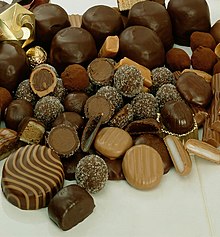
 Chocolate with various fillings.
Chocolate is a processed product derived from the seed of the tropical Theobroma cacao tree. Due to the intense bitter taste of the seeds of the cacao tree, the seeds must be fermented to develop the flavor. After fermentation, the beans are dried, cleaned, and roasted, with the shell removed to produce cacao nibs. The nibs are grounded into cocoa mass, which is pure chocolate. This cocoa mass, which is usually liquefied then molded with or without added ingredients, is called chocolate liquor. The liquor may be processed into two components: cocoa solids and cocoa butter. Unsweetened baking chocolate (bitter chocolate) contains primarily cocoa solids and cocoa butter in varying proportions.
In summary, a naturally occurring product goes through a chemical process during which a number of additional ingredients are typically added to produce the product that many people crave. Not surprisingly, when man starts fooling around with nature, the result is usually not so good for you. Chocolate is no exception.
Most commercially available chocolate consumed today combines cocoa solids, cocoa butter or other fat, with some amount of sugar. Milk chocolate is usually a sweet chocolate that additionally contains milk powder or condensed milk. White chocolate is actually not considered a chocolate at all because it contains no cocoa solids. There are little health benefits in milk chocolate and no health benefits whatsoever in white chocolate. Zero. Nada. Zilch. Sorry. However, dark chocolate has it's own story.
So when one asks if chocolate is healthy, one must first clarify about which chocolate they are inquiring and also clarify what they mean by healthy.
Let's take a closer look at what's in cacao. The cacao seed contains alkaloids such as theobromine, phenethylamine and caffeine that all may have a physiological effects on the body and are linked to serotonin levels in the brain. Having a physiological affect on the body or brain per se does not make something healthy any more than a drug that has the same effects. For the most part, medications are necessary evils that provide some critical benefits when used properly to treat disease, but are not generally health promoting products (with some rare exceptions) in the absence of disease. In other words, just because something has an effect on your body doesn't make it necessarily good for you. Think illicit drugs. While cacao may have a role to play in promoting health because of some of its natural constituents such as flavonals and falvonoids, its healthiness really depends on its form and the amount consumed.
Chocolate also contains a wide range of antioxidants that includes soluble phenolic compounds (phenolic acids, catechin, epicatechin, and proanthocyanidins), insoluble polymeric phenolics and methylxanthines. I won't bore you here with a nutrition lesson, but natural occurring antioxidants in their natural state (not processed or extracted) are generally healthy in reasonable amounts. For more on antioxidants, please see my prior blogs on this topic at http://mdprevent.blogspot.com/2012/06/can-we-prevent-aging-national-institute.html and http://mdprevent.blogspot.com/2013/01/the-case-against-antioxidants.html)
So what does the science show in regards to the consequences to one's health from eating chocolate?
Please find below a nice summary taken from Wikipedia about the pros and cons of chocolate. Notice in the "positive" section, the word "may" always figures prominently. Why? The answer is that studies of chocolate are often limited, poorly constructed, paid for by chocolate manufacturers, and/or don't usually fully account for other dietary and lifestyle factors. For example, consuming a lot of chocolate containing fat is less problematic when you otherwise limit your saturated fat intake. Studying chocolate out of context is like saying that eating a low fat dairy diet is healthy and then failing to mention that the comparison was made to a full fat dairy diet instead of a non-dairy diet. (Side note: actual study played that deceptive game). My review of the chocolate studies reveals such fundamental flaws in study design, which by and large, makes such studies unreliable.Nevertheless, her's some of the studies.
Health effects

Main articles: Health effects of chocolate and Theobromine poisoning
- Positive
- Cocoa or dark chocolate may positively affect the circulatory system.[70]
- Several studies have suggested that eating chocolate can help reduce the risk of certain cardiovascular problems[71][72][73] and also reduce blood pressure in both overweight and normal adults.[71]
- Chocolate may boost cognitive abilities.[74]
- Dark chocolate may lower cholesterol levels in adults.[75] Although basic research has provided preliminary evidence that polyphenols in chocolate might inhibit oxidation of LDL cholesterol,[76] few results from clinical trials are conclusive about such an effect in humans.[77][78]
- According to one study, chocolate consumption correlates with lower Body Mass Index.[79]
- Other possible effects under basic research include anticancer, brain stimulator, cough preventor and antidiarrhoeal activities.[80]
- Negative
- Chocolate is believed to cause heartburn because of one of its constituents, theobromine, relaxes the oesophageal sphincter muscle, hence permitting stomach acidic contents to enter into the oesophagus.[81] Theobromine is also toxic to many animals because they are unable to metabolize it (see theobromine poisoning).[3]
- The unconstrained consumption of large quantities of any energy-rich food, such as chocolate, without a corresponding increase in activity, is thought to increase the risk of obesity. Raw chocolate is high in cocoa butter, a fat which is removed during chocolate refining, then added back in varying proportions during the manufacturing process. Manufacturers may add other fats, sugars, and milk as well, all of which increase the caloric content of chocolate.
- Chocolate and cocoa contain moderate to high amounts of oxalate,[82][83][84][85][86][87] which can cause some health concerns particularly for individuals at risk for kidney stones.[88]
- Chocolate absorbs lead from the environment during production, and there is a slight concern of mild lead poisoning for some types of chocolate. In a study from Nigeria, the average lead concentration of cocoa beans was less than 0.5 ng/g, among the lowest reported values for a natural food, with lead concentrations ranging from 70–230 ng/g for raw and processed cocoa.[89] These measurements "are consistent with market-basket surveys that have repeatedly listed lead concentrations in chocolate products among the highest reported for all foods. One source of contamination of the finished products is tentatively attributed to atmospheric emissions of leaded gasoline, which is still being used in Nigeria."[89] The figures are still comparatively low when compared to 200,000 ng, which is the WHO tolerable daily limit for lead consumption.[90]
- Research on elderly people showed chocolate might cause osteoporosis.[91]
- A few studies have documented allergic reactions with chocolate in children.[81]
- There is some evidence that chocolate may be addictive.[92][
Really? No kidding. So as you can see, the balance swings in the wind on this one. So how does one decide? Let's look at some other factors.There is also much to say about the fat in chocolate. The most important thing is that most chocolate products contains both healthy and unhealthy fats, the three main fats being oleic (monounsaturated fats) and stearic and palmitic (both saturated fats). The jury is still out whether or not these fats are good or bad for you. Certain camps of opinion are adamantly opposed to them, particularly if you have heart disease, while others favor their use in small amounts. My take-away - limit the intake of these saturated and monounsaturated fats in any form, but do not try to avoid them completely. Nevertheless, typically, the less sugar in a chocolate product, the more fat and vice a versa. You have to read the labels.
Like most people, I like chocolate. However, when I shop for chocolate, I read the labels extremely carefully looking for serving size (at least a third of the bar), very limited added sugar (less than 4 grams per serving), a high percentage of cacao, (Usually 70% or more. By the way, beware of high cacao seducing you into a false sense of security that the product is healthy because the added sugar and fat will quickly eliminate any benefits of the chocolate's flavonals and phenols. ) and finally, no runaway fats (which means look for products that contain less than 15% of the recommended daily fat allowance per serving).
The truth be told is such products with little sugar, high cacao, and reasonable fat usually don't excite the common palate and aren't too popular. Not surprisingly, I often find them selling at a discount. Nice.So in summary, given the nature of processing cacao into chocolate and the common addition of other ingredients to make the chocolate palatable, chocolate can truthfully not be called a healthy food. However, eaten in moderation in small quantities as described above per recommended serving size, added sugar, percentage of cacao, and amount of fat, a daily serving of DARK chocolate can be enjoyed with little worry to one's health. (but don't feed it to your dog or cat as it can be toxic to them). Also, don't drink it with milk as milk binds the phenols. which is the "healthiest" part of the chocolate.Bon appetit!

