
Jonathan Dickinson Park is a Florida State Park located in Martin County, Florida; the Loxahatchee River runs through it.
Last Friday, accompanied by my wife and another couple, I kayaked down the river to view pristine nature. Watching us from the sidelines were a number of alligators, with some appearing as large as ten feet long. One actually swam under my friend's kayak.

Stroking the water in my single kayak, I couldn't help but think what possessed me to go down a river surrounded by ferocious, life-altering creatures with my only defenses a paddle and a pocket-knife. Coupled with the knowledge that death had come to a young boy on this very same river from a similarly situated alligator only added to my puzzlement.
I am not a risk taker by nature, particularly when it comes to nature. True, I was a boy scout for three years, but supervised hikes in the woods was the extent of my trailblazing. Skydiving, motorcycle riding, hang-gliding, parachuting, bungee jumping etc. are simply not part of my repertoire and never have been. So what was I doing on that river? I was taking a calculated risk.
The Merriam Webster dictionary defines a calculated risk as "a hazard or chance of failure whose degree of probability has been estimated before some undertaking is entered upon." I think you will agree that boating down a river inhabited by alligators, one of which already killed someone, without any rescue in site in order to enjoy a unique patch of nature is by all means a calculated risk. Why did I do it and why should my adventure be of any concern to you?
Patients often told me that if they had to give up the foods they loved, there would be no reason to live. Clearly such people live to eat as opposed to eat to live. Even when faced with the risks of heart disease, cancer, stroke, diabetes, etc,, food means too much to them to give up. More importantly, they know there are no guarantees that if they actually gave up their pizza, cakes, burgers, french fries, milk-shakes, pasta, etc. that they would necessarily stay healthy or even live longer. For them, their calculated risk has their favorite foods trumping over potential health risks.
Many people often make the same calculation about exercising regularly and managing their stresses more effectively. For example, if you spend one hour a day exercising for sixty years, you would have spent the equivalent of over three years of awake time (at an average of 17 hours a day) of your life exercising. It is estimated that people who exercise one hour a day, ignoring diet and other longevity factors, will on average live a few years longer. By some calculations, that seems like a wash. I say some, but not mine.
When I think about the consequences of eating the right diet or staying physically active over the course of your life, I think in terms of both possible gains as well as losses. Although there are no guarantees that exercise will keep you alive longer, as Jim Fixx the runner proved by his passing, staying physically active has been clearly associated in every study I ever read with a healthier healthspan, the measurement of how long in life you feel well. So it's not just a matter of living longer, it's also about feeling better during the years you live. In addition, many studies also show that eating healthy when coupled with other healthy lifestyle choices is highly correlated with avoiding the chronic diseases often associated with aging.
To eat what you want and to live a sedentary lifestyle is a calculated risk that you are free to take. It's your life after all. You may think that it is not as foolish as kayaking with alligators, but it's actually far worse given that millions of people have died prematurely from eating too much of the wrong foods while since the 1970s there are only twenty three recorded alligator deaths in the U.S. I prefer those odds. While alligators are a frightening topic and when they kill, they garner major headlines for the gruesomeness, the risk of dying early from an unhealthy lifestyle is far greater than death by alligator even when they are swimming nearby. So if you aren't brave (or stupid, depending on your perspective) enough to go kayaking with alligators, why do you keep eating the way you do? It's a calculated risk to eat unhealthy and the odds are not in your favor.
Now that's something to chomp on (pun intended).
Last Friday, accompanied by my wife and another couple, I kayaked down the river to view pristine nature. Watching us from the sidelines were a number of alligators, with some appearing as large as ten feet long. One actually swam under my friend's kayak.
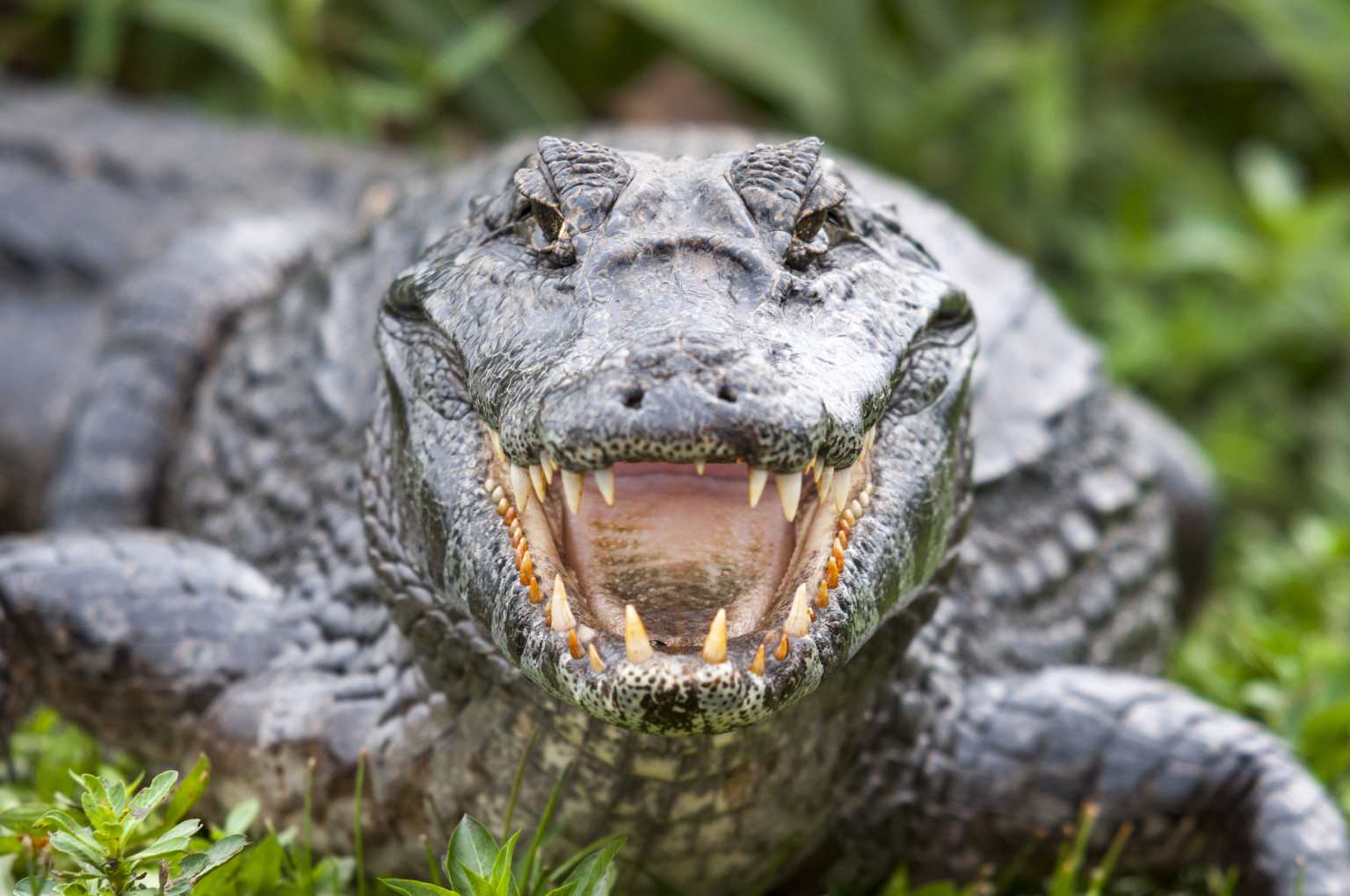
Stroking the water in my single kayak, I couldn't help but think what possessed me to go down a river surrounded by ferocious, life-altering creatures with my only defenses a paddle and a pocket-knife. Coupled with the knowledge that death had come to a young boy on this very same river from a similarly situated alligator only added to my puzzlement.
I am not a risk taker by nature, particularly when it comes to nature. True, I was a boy scout for three years, but supervised hikes in the woods was the extent of my trailblazing. Skydiving, motorcycle riding, hang-gliding, parachuting, bungee jumping etc. are simply not part of my repertoire and never have been. So what was I doing on that river? I was taking a calculated risk.
The Merriam Webster dictionary defines a calculated risk as "a hazard or chance of failure whose degree of probability has been estimated before some undertaking is entered upon." I think you will agree that boating down a river inhabited by alligators, one of which already killed someone, without any rescue in site in order to enjoy a unique patch of nature is by all means a calculated risk. Why did I do it and why should my adventure be of any concern to you?
Patients often told me that if they had to give up the foods they loved, there would be no reason to live. Clearly such people live to eat as opposed to eat to live. Even when faced with the risks of heart disease, cancer, stroke, diabetes, etc,, food means too much to them to give up. More importantly, they know there are no guarantees that if they actually gave up their pizza, cakes, burgers, french fries, milk-shakes, pasta, etc. that they would necessarily stay healthy or even live longer. For them, their calculated risk has their favorite foods trumping over potential health risks.
Many people often make the same calculation about exercising regularly and managing their stresses more effectively. For example, if you spend one hour a day exercising for sixty years, you would have spent the equivalent of over three years of awake time (at an average of 17 hours a day) of your life exercising. It is estimated that people who exercise one hour a day, ignoring diet and other longevity factors, will on average live a few years longer. By some calculations, that seems like a wash. I say some, but not mine.
When I think about the consequences of eating the right diet or staying physically active over the course of your life, I think in terms of both possible gains as well as losses. Although there are no guarantees that exercise will keep you alive longer, as Jim Fixx the runner proved by his passing, staying physically active has been clearly associated in every study I ever read with a healthier healthspan, the measurement of how long in life you feel well. So it's not just a matter of living longer, it's also about feeling better during the years you live. In addition, many studies also show that eating healthy when coupled with other healthy lifestyle choices is highly correlated with avoiding the chronic diseases often associated with aging.
To eat what you want and to live a sedentary lifestyle is a calculated risk that you are free to take. It's your life after all. You may think that it is not as foolish as kayaking with alligators, but it's actually far worse given that millions of people have died prematurely from eating too much of the wrong foods while since the 1970s there are only twenty three recorded alligator deaths in the U.S. I prefer those odds. While alligators are a frightening topic and when they kill, they garner major headlines for the gruesomeness, the risk of dying early from an unhealthy lifestyle is far greater than death by alligator even when they are swimming nearby. So if you aren't brave (or stupid, depending on your perspective) enough to go kayaking with alligators, why do you keep eating the way you do? It's a calculated risk to eat unhealthy and the odds are not in your favor.
Now that's something to chomp on (pun intended).

